










How to Choose a BLDC Motor Driver: Voltage & Current
 Oct 10, 2026|
 View:2
Quick Answer (Executive Summary)
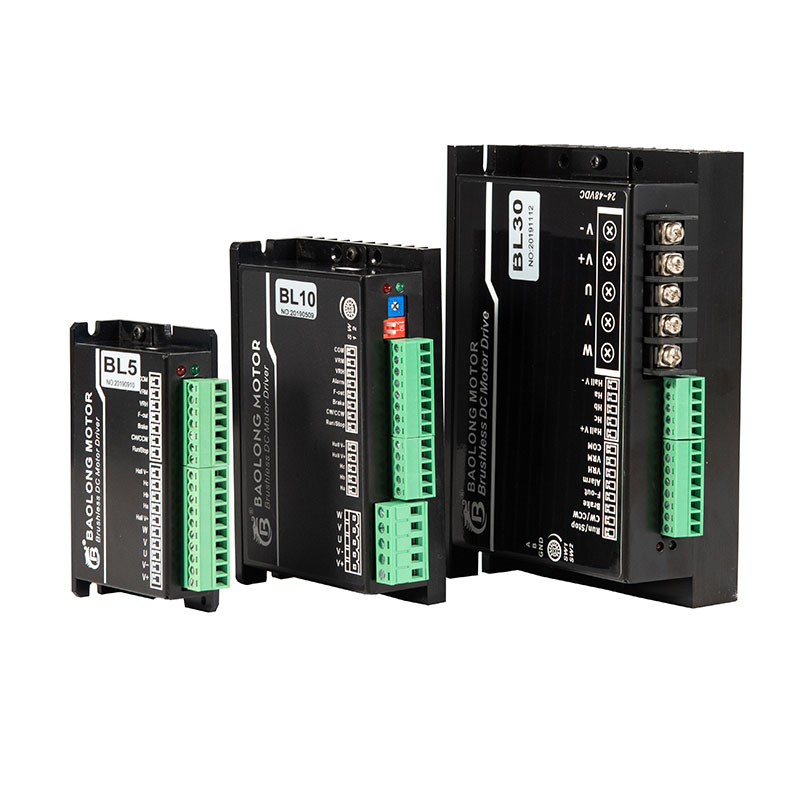
Selecting the right BLDC motor driver requires matching the motor's voltage, continuous and peak phase currents, and feedback system (Hall-sensor or sensorless). As a premier custom motor manufacturer in China with over 20 years of experience, Baolong Motor offers the BL Series Brushless Motor Drives, perfectly matched with our BLDC motors. These drivers support advanced control interfaces (PWM, analog, CANopen, RS485) and robust protection functions, widely used in logistics AGVs, medical devices, and industrial automation.
Choosing the right brushless DC (BLDC) motor driver is essential for achieving reliable motor performance, accurate speed control, and long-term operating stability. For engineers, equipment manufacturers, and OEM buyers, selecting a BLDC motor driver involves more than checking a single specification. The driver must match the motor's electrical characteristics, current requirements, feedback system, control interface, and operating environment.
Key Takeaways
Match the driver's voltage range to the motor and account for fluctuations during acceleration and braking.
Distinguish between continuous RMS phase current and peak current to ensure reliable startup and sustained operation.
Verify feedback compatibility (Hall-effect sensors vs. sensorless back-EMF) and control interfaces (PWM, CANopen, RS485).
Evaluate thermal derating and dynamic braking requirements, including the need for external braking resistors.
Manufacturer Backing: Baolong Motor's BL Series drives are engineered to perfectly match our brushless motors, reducing tuning time and ensuring system reliability backed by our 17,000 sqm manufacturing facility.
1. What Does a BLDC Motor Driver Do?
A BLDC motor driver converts electrical power into controlled three-phase power for the motor windings. Depending on its design, the driver also manages electronic commutation, speed regulation, current limiting, feedback processing, and motor protection.
BLDC motor: Converts electrical energy into mechanical rotation.
Motor driver: Controls the power supplied to the motor.
Power supply and controller: Provide electrical power and required control signals.
2. Match Voltage and Current Ratings
Voltage Considerations
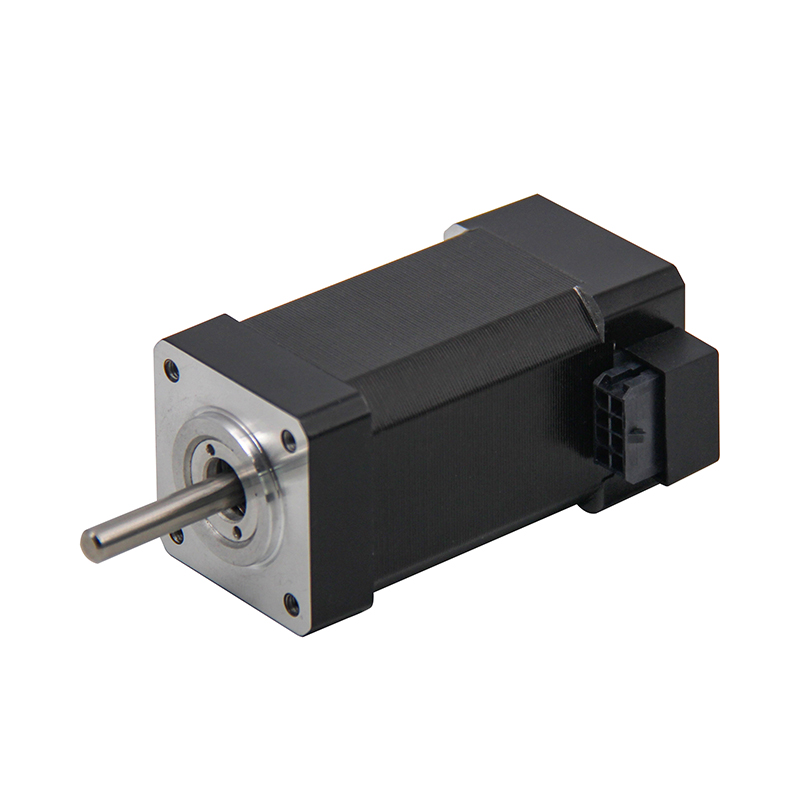
Common BLDC motor systems use DC supply voltages such as 12 V, 24 V, and 48 V. The appropriate voltage depends on the motor design, power supply, required speed, and application. You must also consider voltage fluctuations, including minimum/maximum limits, allowable variation during operation, and the power supply's ability to maintain voltage under heavy loads.
Continuous vs. Peak Current
Current capability is one of the most important factors. (Note: Always check if the manufacturer specifies RMS phase current or input DC current.)
Continuous current rating: The current a driver can support during sustained operation under specified thermal conditions.
Peak current rating: A higher current the driver can deliver for a limited period to support startup, stall, and acceleration demands.
3. Check Motor and Driver Compatibility
Hall-sensor and sensorless control
Some BLDC motors use Hall-effect sensors to detect rotor position. Other systems use sensorless control to estimate rotor position from electrical characteristics such as back EMF. Ensure your driver supports the specific feedback method required by your motor.
Control and feedback interfaces
PWM or analog speed commands.
Industrial communication protocols (e.g., CANopen, RS485, EtherCAT).
Start, stop, enable, and direction signals.
Speed feedback, tachometer outputs, and alarm signals.
4. Evaluate Protection and Operating Conditions
Thermal performance: Check cooling requirements and current derating curves for enclosed cabinets.
Operating environment: Consider dust, moisture, vibration, and ventilation.
Braking requirements: Verify dynamic braking capabilities and the need for an external braking resistor to handle regenerative energy during rapid deceleration.
Safety and fault recovery: Confirm fault response (e.g., over-current, over-voltage) and restart behavior.
Field experience shows that ignoring thermal derating and regenerative energy during rapid deceleration is a leading cause of BLDC driver failure in high-inertia logistics and robotics applications. Always calculate the braking energy and size the braking resistor accordingly to protect the driver's power stage.
5. Selection Guide & Common Mistakes
Selection Factor | What to Check | Why It Matters |
|---|---|---|
Supply voltage | Supported DC voltage range | Ensures power supply and motor compatibility |
Continuous current | RMS Phase output rating | Prevents thermal shutdown during sustained operation |
Peak current | Peak rating and allowable duration | Supports high-torque startup and acceleration |
Feedback | Hall-sensor or sensorless support | Ensures smooth commutation and closed-loop control |
Control interface | PWM, analog, CANopen, RS485 | Enables seamless system integration |
Common Mistakes to Avoid
Choosing a driver only by rated voltage.
Ignoring startup and acceleration peak current demands.
Confusing input DC current with motor phase current.
Overlooking feedback requirements (Hall vs. Sensorless).
Ignoring thermal derating in poorly ventilated enclosures.
Failing to test the system under real mechanical loads.
Review the supply voltage, current requirements, feedback system, control signals, and actual operating conditions before selecting a driver model. To eliminate compatibility headaches and reduce tuning time, consider using matched motor and drive kits. Explore Baolong's BLDC motor product range and our perfectly matched BL Series motor drives.
Choosing the right BLDC motor driver requires evaluating supply voltage, continuous and peak current capability, motor feedback, control interfaces, protection functions, and operating environment. By avoiding common sizing mistakes and leveraging matched motor-drive solutions, engineers can ensure optimal performance and longevity for their automated systems.
Optimize Your Motion Control System
Get free sizing recommendations and custom OEM/ODM designs from Baolong's engineering team.
FAQ
How do I know what size BLDC motor driver I need?
Start with the motor's rated voltage, continuous phase current, peak current demand, speed and torque requirements, and feedback method. Then verify the driver's electrical and control specifications against your application's real-world load profile.
Can I use a 48 V BLDC motor driver with a 24 V motor?
Not automatically. Confirm the motor's permitted operating voltage and the driver's supported supply range. Some advanced drivers allow parameter tuning for lower voltage motors, but mismatching can lead to overheating or poor commutation.
Is a higher-current BLDC motor driver always better?
Not necessarily. While oversizing slightly is safe for thermal management, selecting a vastly oversized driver can increase costs, cabinet footprint, and tuning complexity. Select the driver according to the motor's actual requirements and control compatibility.
Do all BLDC motor drivers support Hall sensors?
No. Check the manufacturer's specifications to confirm whether the selected driver supports Hall-sensor feedback, sensorless back-EMF control, or encoder-based closed-loop control.
What information should I provide when requesting a quotation?
Provide the motor model, rated voltage, continuous and peak current requirements, rated speed and torque, feedback configuration, required control signals (e.g., CANopen, PWM), and the application environment (e.g., ambient temperature, IP rating).


Recent News
1.Gearbox Brushless Motor and the difference between the Brush Motor
2022-10-102.Exploring the Advancements and Applications of Brushless DC Motors
2023-06-223.Are Brushless Motors Waterproof? Complete Guide to Water Resistance in BLDC Motors
2026-01-204.Flat Brushless Motor Selection Made Easy for Your Project
2026-05-275.What Does KV Mean for Brushless Motors: Your Complete Guide to Motor Speed Ratings
2025-12-12