









Which Motors Are the Best: Servos or Steppers for Automation?
 Sep 16, 2026|
 View:15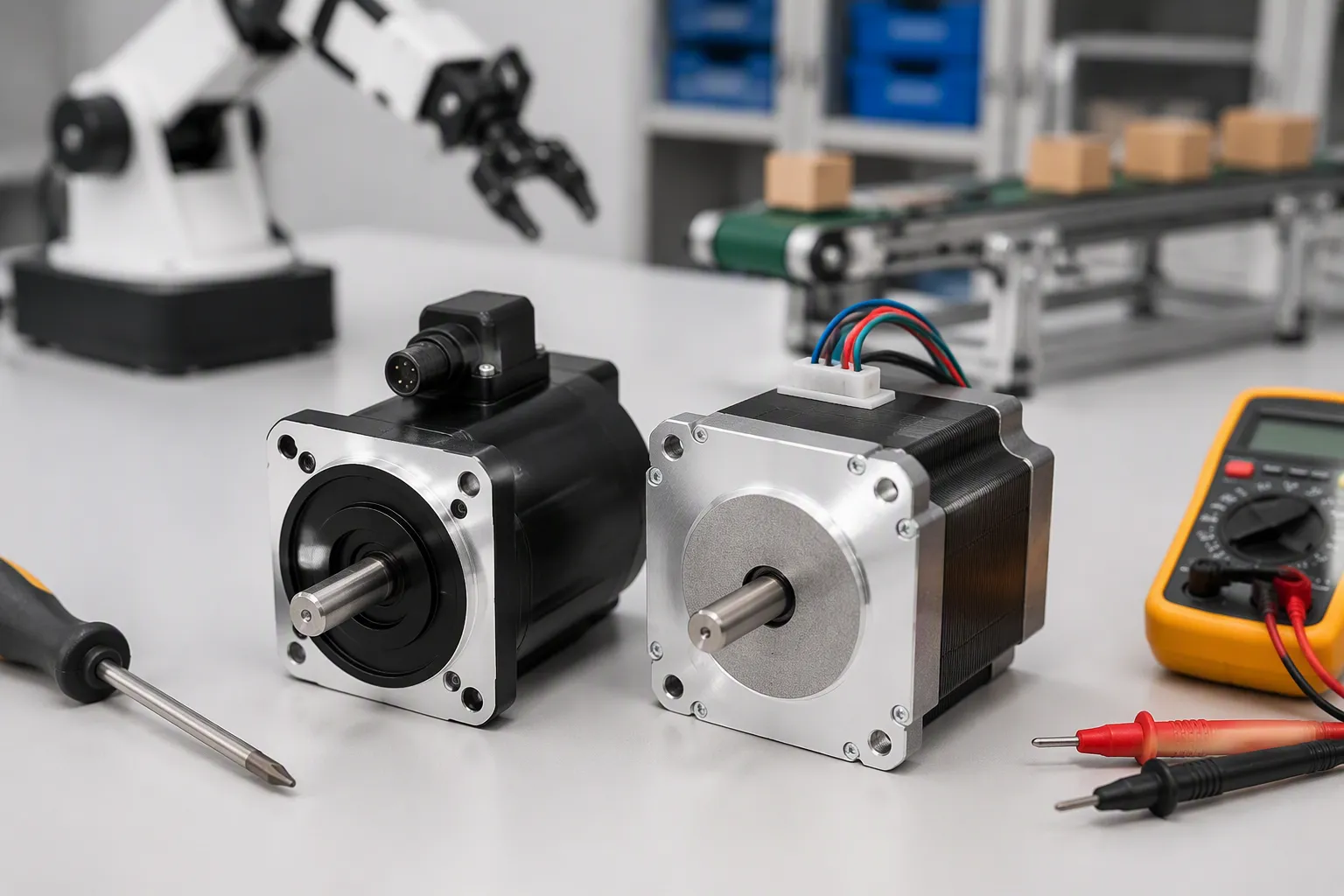
No single motor wins every job. For factory automation engineers and facility managers, the best choice depends on the application's specific demands, not a universal ranking. Servos and steppers each dominate different scenarios on the production floor.
A stepper motor suits low-speed positioning with modest budgets, such as basic packaging lines. A servo handles dynamic, high-speed work with changing loads, like robotic arms. With over 20 years of manufacturing expertise, Baolong Motor helps factories navigate this choice to optimize both performance and Total Cost of Ownership (TCO).
This guide compares both options across real performance factors and maps them to specific industrial applications, providing a practical checklist for matching the right motor to your manufacturing task.
Key Takeaways for Factory Automation
Stepper motors work best for low-speed, predictable tasks. They hold position well without feedback, making them cheap and simple for cost-sensitive builds.
Servo motors dominate high-speed, dynamic tasks. They use closed-loop feedback to keep torque steady under changing loads, essential for robotics and precision machining.
Closed-loop steppers (Stepper Servo Motors) blend stepper affordability with encoder feedback. They prevent lost steps and run cooler, serving as a perfect upgrade path for textile and medical equipment.
Customization matters: Features like IP65 ratings, integrated brakes, and aviation plugs can drastically reduce machine design time and secondary engineering costs.
Servo vs. Stepper: The Core Engineering Difference
A stepper motor moves in fixed increments. A servo motor adjusts continuously based on feedback. That single distinction explains most performance differences on the factory floor.
How a Stepper Motor Works (Open-Loop)
A stepper motor divides each full rotation into equal steps. Standard hybrid stepper motors have 50 rotor teeth with a 7.2° pitch, producing a 1.8° step angle (200 steps per revolution). The controller sends pulses, and the motor advances one step per pulse. This is open-loop control: the system sends commands without verifying the actual position. The motor trusts that each pulse produces the expected movement.
How Servo Motors Work (Closed-Loop)
A servo motor operates with closed-loop control. The drive continuously monitors actual speed, torque, and position through an encoder. It adjusts control signals in real time, automatically compensating for disturbances like sudden load changes on a conveyor belt.
The most significant difference between open and closed loop control systems is that an open loop system has no feedback path, while a closed loop system relies on real-time data to guarantee precision—a critical factor in modern automated manufacturing.
Aspect | Open-Loop Stepper (Baolong Standard Series) | Closed-Loop Servo (Baolong Advanced Series) |
|---|---|---|
Feedback usage | Operates without output feedback | Uses real-time encoder feedback for speed, torque, position |
Disturbance handling | May stall or lose steps under unexpected heavy loads | Automatically compensates and maintains position |
Heat Generation | Runs hot while holding position (constant current) | Reduces current under lighter loads, running cooler |
Torque, Heat, and Efficiency in Industrial Environments
Torque behavior reveals a major operational difference. Servo torque stays consistent across the full speed range. Stepper torque approaches zero at high speeds.
Heat & Battery Life in Logistics (AGV/AMR): For AGV and AMR logistics systems running on battery power, heat generation equals wasted energy. An open-loop stepper maintains maximum current and runs hot even while holding position. Upgrading to Baolong’s Gearbox Brushless or Closed-loop Stepper Motors drastically reduces current draw during standstill, extending vehicle uptime and reducing charging frequency.
Noise in Medical Equipment: Servo motors run quieter due to smoother operation. Stepper types produce more audible noise at certain speeds, particularly during resonance. For medical device manufacturers (like CT scanners or surgical robots), the smoother current control of Baolong's servo motors is essential for reducing vibration and acoustic noise.
Speed and Torque Compared
High-Speed Performance
Speed capability separates these two motor types dramatically. Stepper motors have a recommended speed range of 300–600 RPM. Torque drops rapidly above 1,000 RPM. Servo motors have a rated speed range of 1,000–3,000 RPM and can achieve maximum speeds far beyond that.
Motor Type | Recommended Speed Range | Rated Speed | Torque at High Speed |
|---|---|---|---|
Stepper | 300–600 RPM | Below 1,000 RPM | Drops rapidly above 1,000 RPM |
Servo | 1,000–3,000+ RPM | 1,000–3,000 RPM | Nearly constant within rated range |
Holding Torque and Low-Speed Work
Steppers excel at low-speed holding torque. A NEMA 34 stepper motor drawing 4.0 A per phase provides a massive holding torque, making it highly valuable for CNC machinery and 3D printing where consistent position at standstill is required without continuous power drain.
Precision and Accuracy Compared
Microstepping and Resolution
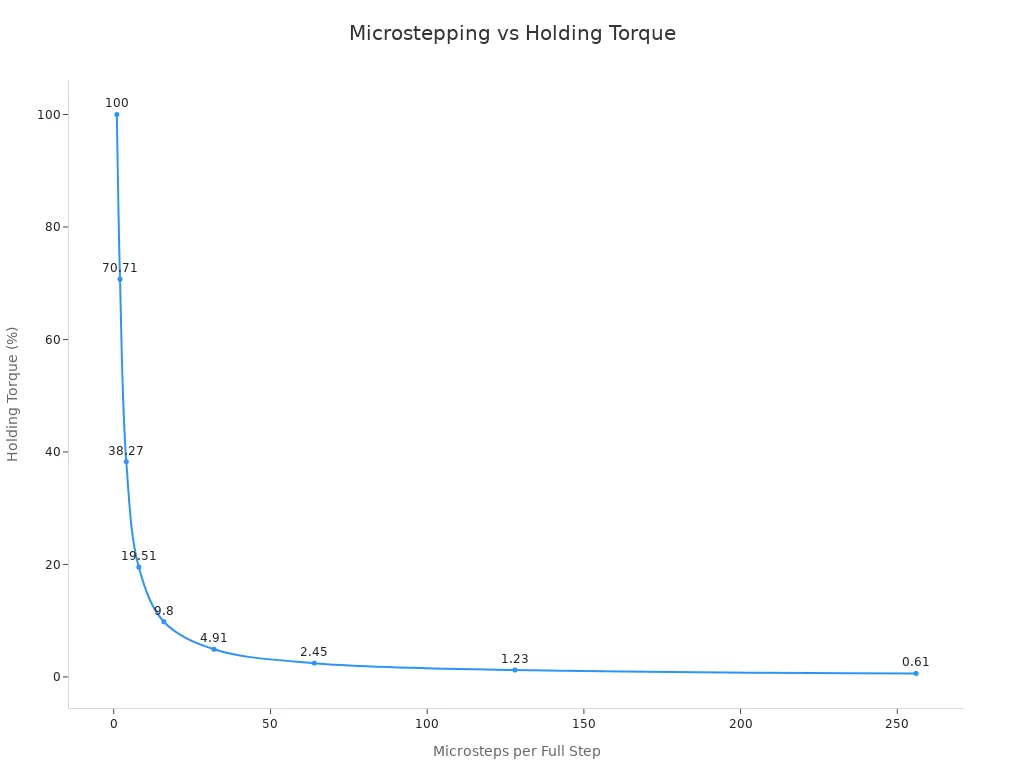
Microstepping divides each full step into smaller increments. Modern drives support up to 256 microsteps per full step. However, higher microstep counts do not guarantee better accuracy. Incremental holding torque drops sharply as microsteps increase.
The Closed-Loop Stepper Advantage for Textile & Packaging
Real-world precision depends on load and inertia. A fully closed-loop stepper driver with a high-resolution encoder achieves micron-level stop accuracy. This setup corrects position errors at the load and eliminates backlash. For textile machinery and high-speed packaging lines, Baolong’s Stepper Servo Motors offer the perfect middle ground: they integrate encoders to prevent lost steps, delivering servo-like reliability at a fraction of the cost.
Cost, Control Complexity, and Total Cost of Ownership (TCO)
Upfront Price vs. Downtime Cost
A stepper motor typically costs less upfront. However, total cost extends beyond the invoice. A missed step in an automated assembly line doesn't just mean a lost second; it means scrapped materials and line stoppages. The cost of a single hour of unplanned downtime can wipe out the savings on 100 motors.
The Baolong Quality Guarantee: To mitigate this risk, Baolong employs a rigorous 6-step manufacturing process. Every custom motor undergoes in-house Dynamometer (测功机) testing to verify exact torque and speed curves under real-world loads before shipping.
Customization and Integration Costs
Off-the-shelf motors often require factories to redesign machine mounts or add external brakes. Baolong’s tailored approach—including IP65 waterproof ratings, integrated electromagnetic brakes, custom shaft options, and aviation plugs—eliminates these secondary engineering costs, accelerating your machine's time-to-market.
When to Choose a Stepper Motor
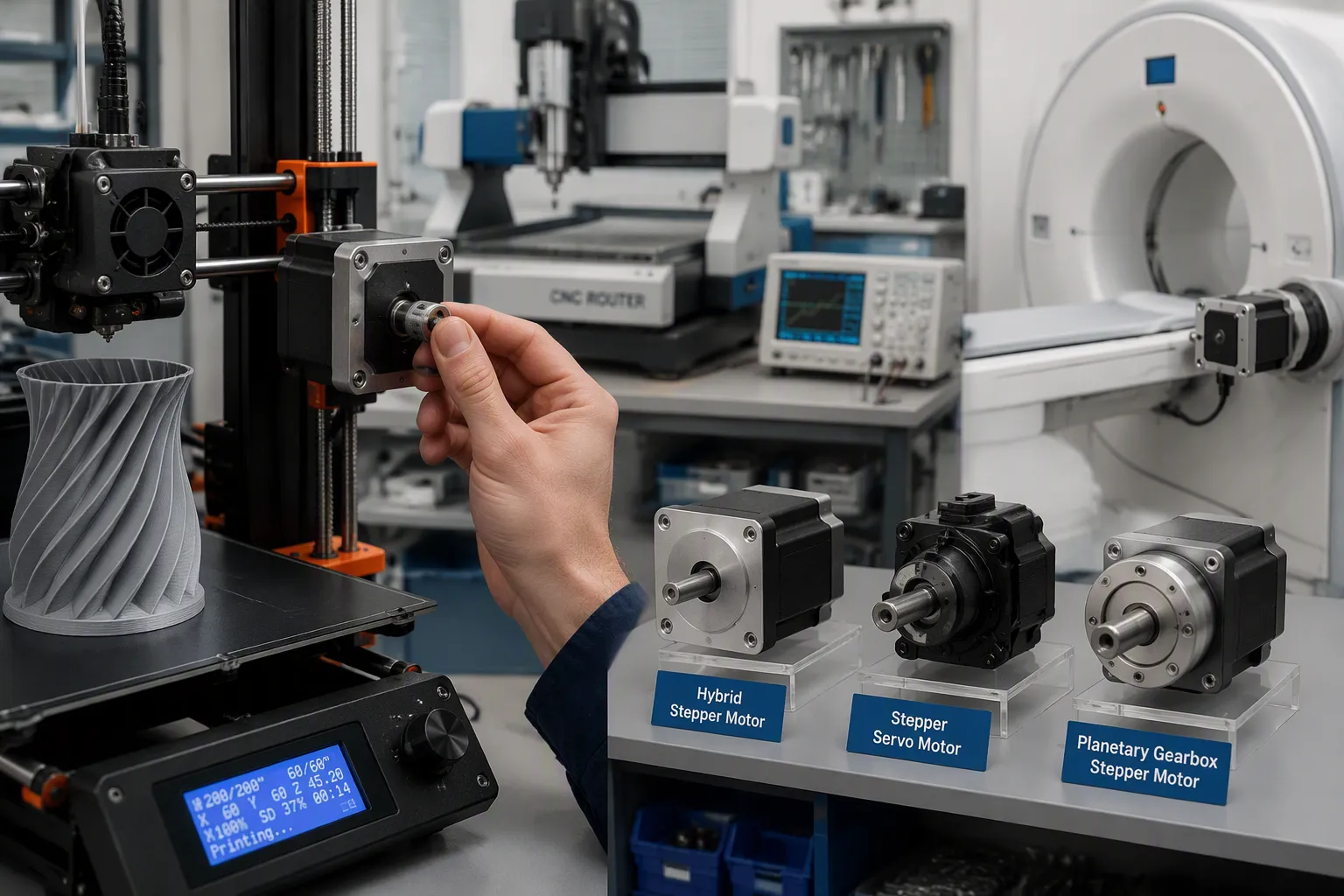
Ideal Applications & Warning Signs
Steppers shine in repetitive tasks, budget-limited builds, and low-to-moderate speed positioning.
Best for: The axis stays below 1,000 RPM with a highly predictable load (e.g., CNC routers, basic conveyor indexing).
Best for: Budget is the primary constraint, and the control team lacks advanced tuning experience.
Warning: If the application requires rapid acceleration or frequent load changes, open-loop steppers will likely stall or lose steps.
When Servo Motors Win
Ideal Applications: Cobots and Dynamic Lines
In modern Collaborative Robots (Cobots), joint space is extremely limited. Traditional servos may not fit. This is where Baolong’s Multipole Torque Servo Motors excel, providing high torque density in a compact, frameless design, allowing robot manufacturers to build lighter, more agile arms.
Best for: You need constant torque across a wide speed range (1,000 - 3,000+ RPM).
Best for: The machine requires ultra-quiet operation and zero vibration (e.g., Medical imaging devices, semiconductor manufacturing).
Warning: If the axis only moves a few hundred RPM with a static load, the extra cost and tuning complexity of a servo system are hard to justify.
The Middle Ground: Closed-Loop Stepper Motors
For factories upgrading from open-loop systems without the full budget for AC servos, Closed-Loop Steppers (Stepper Servo Motors) offer the perfect middle ground. They combine the affordability of steppers with the stall-detection and position-correction of encoders.
This is highly popular in cost-sensitive manufacturing where moderate dynamics are required. They consume current proportionally to torque, running much cooler than traditional open-loop steppers, making them ideal for enclosed control panels and 24/7 operations.
Summary & Next Steps
No universal "best" motor exists. The correct choice matches the application. Stepper motors thrive in predictable, low-speed tasks requiring high holding torque. A servo motor suits dynamic lines demanding consistent torque and rapid acceleration.
Beyond specifications, partner with a manufacturer that guarantees reliability. With over 20 years of design experience and rigorous dynamometer testing, Baolong Motor ensures your production lines run without interruption.
FAQ: Motor Selection for Manufacturing
Can an open-loop stepper motor cause production downtime?
Yes, if it encounters a load heavier than expected, it can miss steps without triggering an alarm, leading to defective products. Upgrading to Baolong's closed-loop stepper motors provides stall detection, alerting the PLC immediately and preventing batch scrapping.
Why do AGV manufacturers prefer Brushless Motors with Gearboxes over Steppers?
AGVs run on batteries. Open-loop steppers draw maximum current even when holding position, draining batteries and generating excess heat. Baolong's Brushless DC (BLDC) motors with planetary gearboxes only draw the current needed to overcome friction and load, significantly extending AGV runtime.
Does Baolong offer motors for harsh factory environments?
Yes. We offer extensive customization, including IP65 water and dust-proof ratings, integrated electromagnetic brakes for vertical axes, and rugged aviation plugs to ensure reliable connections in high-vibration environments like textile mills and heavy machinery.
How does Baolong guarantee motor performance before shipping?
Every batch undergoes strict quality control, including testing on our in-house Dynamometer (测功机). This verifies the exact torque-speed curve, ensuring the motor you receive performs precisely as required by your machine's design parameters.