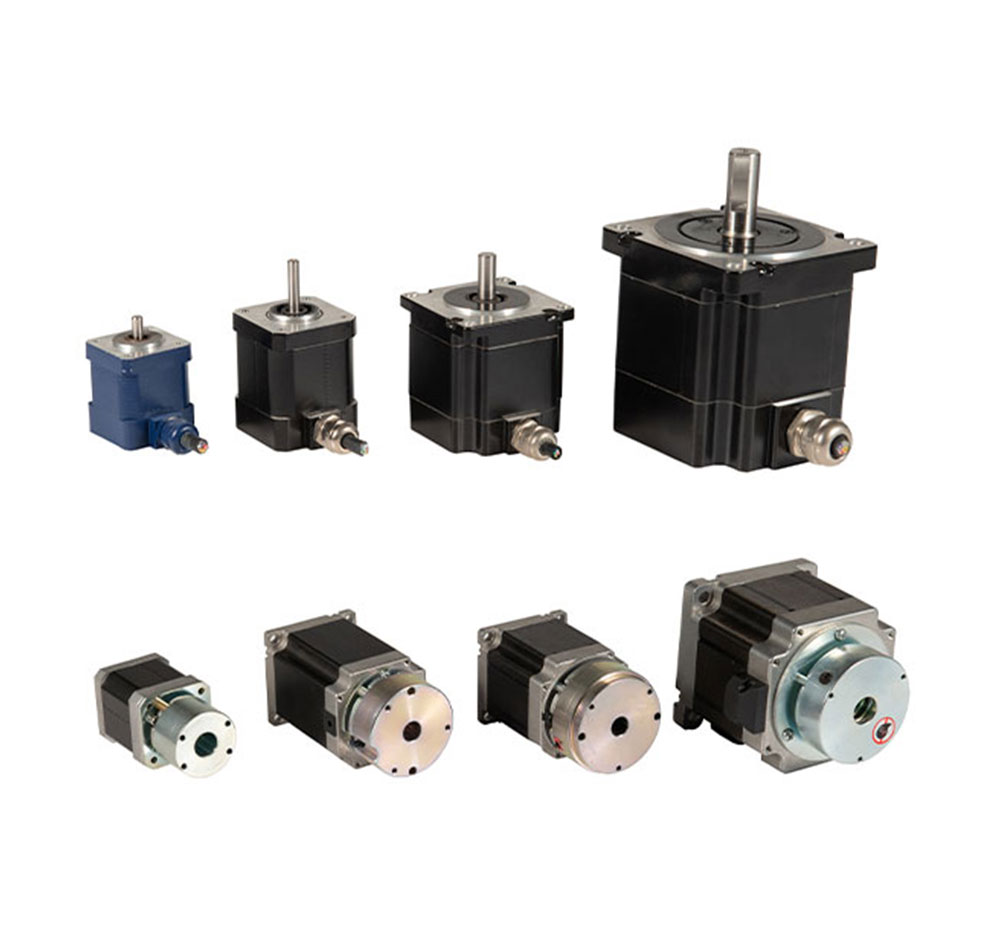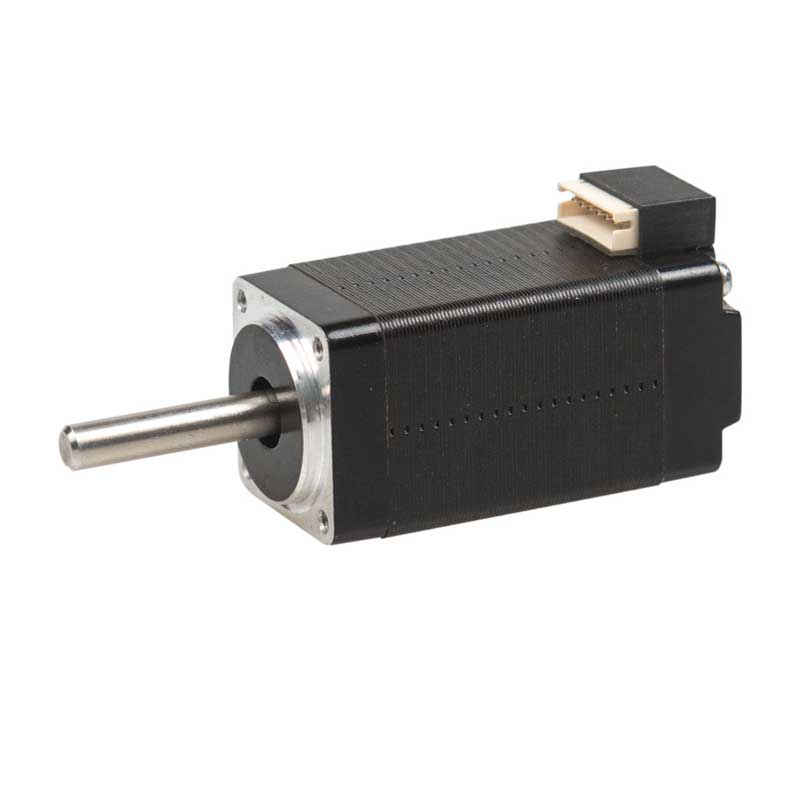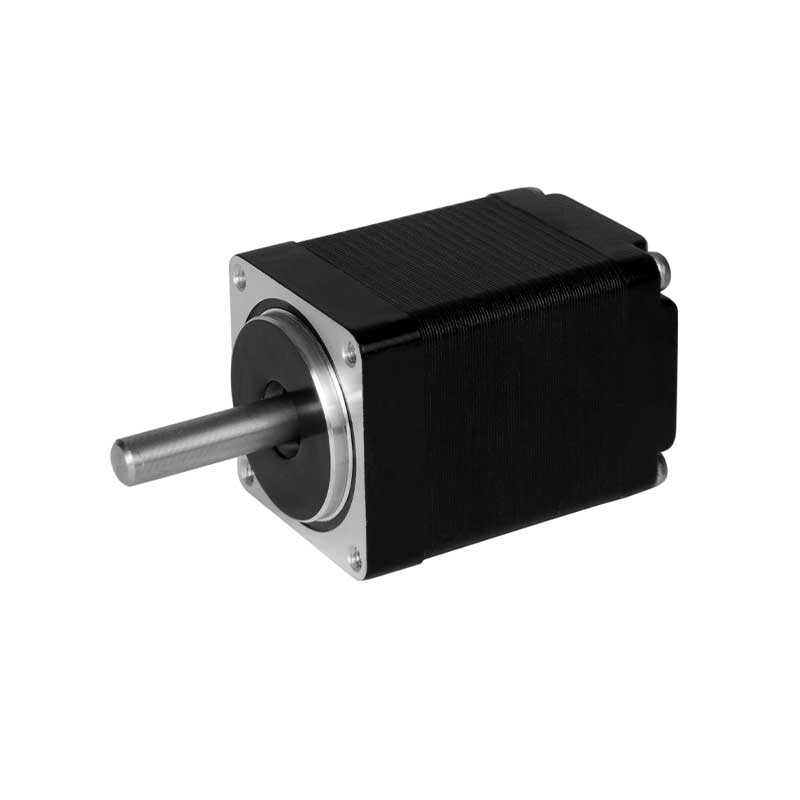










What kind of stepping motor is most commonly used?
 Oct 31, 2022|
 View:1657
In the realm of precision motion control, a question frequently emerges across industries: what kind of stepping motor dominates industrial automation, robotics, and precision equipment? The answer reveals itself through market adoption, technical capability, and practical application success. Among the three primary stepper technologies, the hybrid design has established itself as the overwhelming industry preference, accounting for approximately 80-85% of all stepper installations globally. This dominance stems not from marketing but from engineering merit: the hybrid architecture uniquely combines high torque density, precise step resolution, and cost-effective manufacturing. Understanding why the hybrid stepping motor achieved this market position, how it works, and where it excels provides essential knowledge for anyone involved in motion control system design or procurement.
Key Takeaways
Market Dominance: Hybrid designs represent 80-85% of all stepper installations worldwide, making them the most commonly used type across virtually all industries requiring precision motion control.
Technical Superiority: Hybrid motors combine the best features of permanent magnet and variable reluctance technologies, delivering superior torque density and finer step resolution than either predecessor design.
Standard Step Angles: The most common hybrid motors operate at 1.8 degrees per step (200 steps per revolution), with 0.9-degree variants available for applications requiring higher resolution.
NEMA Standardization: Industry-standard frame sizes (NEMA 8, 11, 14, 17, 23, 34) ensure mechanical interchangeability, simplifying design and procurement processes across global supply chains.
Application Breadth: From medical devices to industrial CNC systems, hybrid motors serve applications spanning micron-level precision to multi-hundred-watt power output requirements.
The Three Stepping Motor Technologies: A Comparative Foundation
Before examining why hybrid designs dominate the market, understanding all three fundamental stepping motor technologies provides essential context. Each design emerged to address specific technical requirements and manufacturing constraints, yet only one achieved broad commercial success.
Permanent Magnet Stepper Motors
The permanent magnet (PM) design represents the simplest stepper architecture. A cylindrical permanent magnet forms the rotor, surrounded by electromagnetically-activated stator poles. When electrical pulses energize the stator coils in sequence, the rotor advances in discrete steps as magnetic attraction and repulsion forces alternate. PM designs excel in low-cost, low-precision applications where step angles of 7.5 to 15 degrees suffice. However, their relatively coarse resolution and limited torque output prevent them from serving the precision requirements of modern automation systems.
Variable Reluctance Stepper Motors
Variable reluctance (VR) motors operate through a different physical principle: magnetic flux naturally seeks the path of minimum reluctance. The VR design features a soft iron rotor machined with multiple teeth and a stator with electromagnetically-activated poles. When stator poles energize, the rotor teeth align with them to minimize magnetic reluctance. By sequencing which poles activate, the rotor steps forward. VR designs achieve finer step resolution than PM types, but lack the holding torque and torque density needed for many industrial applications. Without permanent magnets, VR motors also produce no detent torque when de-energized, offering less positional stability.

Hybrid Stepper Motors: Combining the Best of Both Worlds
The hybrid stepping motor architecture emerged as an elegant synthesis of PM and VR principles. An axially-magnetized permanent magnet sits at the rotor's center, creating north and south magnetic poles. Soft iron end caps, each precision-machined with many teeth, attach to the magnet ends. Crucially, these end caps are offset by half a tooth pitch, creating the geometric complexity necessary for fine step resolution. The stator features multiple electromagnetically-activated poles with matching teeth. This combination delivers the high torque of permanent magnet designs with the fine step resolution characteristic of variable reluctance architectures, all while maintaining manufacturing feasibility at commercial scale.
| Technology Type | Typical Step Angle | Torque Output | Market Share | Typical Applications |
|---|---|---|---|---|
| Permanent Magnet | 7.5° - 15° | Low to Moderate | ~5-10% | Low-cost consumer devices, simple positioning |
| Variable Reluctance | 5° - 15° | Moderate | ~5-10% | Specialized applications, legacy systems |
| Hybrid | 0.9° - 1.8° | High | ~80-85% | Industrial automation, CNC, robotics, medical devices, 3D printing |
How Hybrid Stepper Motors Achieve Superior Performance
Understanding the internal mechanism of hybrid motors illuminates why they dominate motion control applications. The operational principle, while elegant, relies on precise mechanical and electromagnetic coordination.
Internal Structure and Magnetic Configuration
A typical stepping motor of hybrid design contains a central permanent magnet magnetized along its axis, creating distinct north and south poles at opposite ends. Attached to each pole face, toothed rotor cups made from soft magnetic steel multiply the number of effective magnetic poles. In a common configuration, each cup might contain 50 precisely-machined teeth. Critically, the two cups mount with a half-tooth offset: when one cup's teeth align perfectly with stator poles, the other cup's teeth align precisely between stator poles. This offset creates the fine positioning capability that distinguishes hybrid designs from their predecessors.
The stator consists of multiple electromagnetically-activated poles, each wound with copper coils. A typical two-phase hybrid motor contains eight stator poles organized into two independent electrical phases. When electrical current energizes one phase, half the stator poles become north poles while the opposite poles become south poles. The permanent magnet's magnetic field interacts with the stator's electromagnetic field, generating the torque that rotates the shaft to a stable position where magnetic forces balance.
Step Resolution and Positioning Accuracy
The standard hybrid stepping motor achieves 1.8-degree step resolution, equivalent to 200 steps per complete revolution. This resolution derives from the geometric relationship between rotor teeth and stator poles. With 50 teeth on each rotor cup and 8 stator poles, each electrical phase shift produces a precise 1.8-degree advancement. The fundamental operating principle enables position control without feedback sensors, as each electrical pulse corresponds to a known mechanical displacement.
Advanced drive electronics enable microstepping, where intermediate current levels create stable positions between full steps. Modern controllers commonly divide each full step into 8, 16, or even 256 microsteps, achieving positional resolution down to 0.007 degrees. While mechanical resonances and detent torque variations limit practical accuracy to approximately 3-5% of a full step, microstepping dramatically improves motion smoothness and reduces audible noise during operation.
NEMA Standardization: Ensuring Global Interoperability
One factor accelerating hybrid motor adoption involved industry standardization of mechanical dimensions. The National Electrical Manufacturers Association (NEMA) established frame size specifications that ensure mounting compatibility regardless of manufacturer. NEMA standards define critical dimensions including faceplate size, mounting hole positions, shaft diameter, and shaft length.
The NEMA designation system uses a two-digit number representing the faceplate dimension in tenths of an inch. A NEMA 17 motor features a 1.7-inch (43mm) square faceplate, while NEMA 23 measures 2.3 inches (57mm) square. This standardization enables mechanical interchangeability: any NEMA 17 motor from any manufacturer will mechanically fit where another NEMA 17 was specified. The standardization extends globally, with international manufacturers adopting NEMA dimensions even when using metric measurements internally.
| NEMA Size | Faceplate Dimension | Typical Torque Range | Common Applications |
|---|---|---|---|
| NEMA 8 | 0.8" (20mm) | 0.01-0.02 Nm | Miniature devices, camera mechanisms |
| NEMA 11 | 1.1" (28mm) | 0.05-0.08 Nm | Medical devices, laboratory equipment |
| NEMA 14 | 1.4" (35mm) | 0.1-0.2 Nm | Small robotics, pick-and-place systems |
| NEMA 17 | 1.7" (43mm) | 0.2-0.6 Nm | 3D printers, desktop CNC, general automation |
| NEMA 23 | 2.3" (57mm) | 1.0-3.0 Nm | CNC machines, industrial robotics, packaging equipment |
| NEMA 34 | 3.4" (86mm) | 4.0-12.0 Nm | Large CNC mills, heavy automation |
Application Domains Where Hybrid Steppers Excel
The dominance of hybrid stepping motor technology extends across remarkably diverse industries. Their unique combination of precise positioning, holding torque, and open-loop controllability addresses requirements that challenge alternative motion control technologies.
Industrial CNC and Machine Tools
Computer numerical control machines represent one of the largest application sectors for hybrid motors. CNC routers, mills, lathes, plasma cutters, and laser engravers rely on precise multi-axis positioning. NEMA 23 and NEMA 34 hybrid designs deliver the torque necessary to drive ball screws and belt systems while maintaining positioning accuracy measured in thousandths of an inch. The open-loop control architecture simplifies system integration compared to servo systems requiring encoder feedback, reducing both cost and complexity for mid-range machine tool applications.
Additive Manufacturing and 3D Printing
The 3D printing revolution occurred largely on the foundation of NEMA 17 hybrid motors. Fused deposition modeling (FDM) printers typically employ four or five hybrid motors: three for XYZ axis positioning and one or two for extruder drive. The combination of acceptable torque, compact form factor, low cost, and adequate positional accuracy enables affordable desktop 3D printing. Advanced printers increasingly employ NEMA 23 motors for improved acceleration and higher print speeds while maintaining dimensional accuracy.
Medical and Laboratory Equipment
Medical device manufacturers extensively deploy hybrid motors in automated laboratory equipment, diagnostic instruments, and surgical tools. Applications include automated microscope stages, sample handling robotics, infusion pump mechanisms, and surgical positioning systems. The combination of precise repeatable positioning, low electrical noise that could interfere with sensitive instrumentation, and reliable operation without maintenance makes hybrid designs particularly suitable for medical applications where device reliability directly impacts patient care.
Packaging and Assembly Automation
High-speed packaging lines and automated assembly systems utilize hybrid motors for precise product positioning, labeling, sorting, and material handling. The ability to execute rapid positioning moves, maintain position without continuous power consumption, and operate reliably through millions of cycles makes hybrid designs ideal for 24/7 production environments. Applications range from pharmaceutical tablet dispensing systems requiring micron-level accuracy to high-speed carton forming machines processing hundreds of units per minute.
Technical Advantages Driving Market Adoption
Several specific technical characteristics explain why hybrid stepping motor designs captured such dominant market share across diverse applications.
Open-Loop Operation Without Feedback
Unlike servo systems requiring position encoders and closed-loop control, hybrid motors operate effectively with open-loop control where no position sensor provides feedback to the controller. Each electrical pulse advances the rotor by a known, repeatable step angle. This characteristic dramatically simplifies system design, reduces component count, lowers system cost, and eliminates encoder failure modes. For applications where load conditions remain predictable and occasional step loss is acceptable, open-loop control provides adequate performance at fraction of servo system cost.
High Holding Torque at Zero Speed
When energized but stationary, hybrid motors generate substantial holding torque resisting external forces attempting to rotate the shaft. This characteristic, known as detent torque when de-energized and holding torque when energized, enables applications requiring load positioning without continuous power consumption or mechanical brakes. The permanent magnet rotor produces residual detent torque even with windings de-energized, maintaining approximate position during power loss conditions.
Excellent Low-Speed Torque Characteristics
Hybrid designs deliver their maximum torque at zero and low speeds, declining gradually as rotational speed increases. This torque-speed characteristic matches requirements for many positioning applications where acceleration from rest and precise low-speed motion matter more than high-speed continuous operation. The torque remains substantial even during slow microstepping sequences, enabling smooth motion at speeds where other motor technologies struggle.
Cost-Effective Manufacturing at Scale
Decades of production experience have optimized hybrid motor manufacturing processes. Automated winding equipment, precision stamping for laminations, and efficient magnet and bearing assembly enable high-volume production at competitive costs. Global competition among manufacturers, particularly from Asian production facilities, has driven prices down while quality has improved through refined manufacturing techniques and statistical process control.
Selection Considerations for Optimal Performance
Choosing the appropriate hybrid motor requires evaluating several technical parameters beyond simple torque requirements.
Torque Requirements and Safety Margin
Motor selection begins with calculating required torque including load inertia, friction, and acceleration forces. Industry practice recommends selecting motors providing 30-50% torque margin above calculated requirements, accounting for torque reduction at operating speeds and providing reserve capacity for unexpected load variations. Torque-speed curves provided by manufacturers enable verification that selected motors deliver adequate torque throughout the operational speed range.
Electrical Characteristics and Driver Matching
Phase voltage, phase current, and winding inductance significantly affect motor performance when paired with drive electronics. Higher voltage drive systems enable greater high-speed performance by overcoming winding inductance, allowing current to rise more quickly during each step. Drive current should match motor phase current ratings to achieve specified torque output. Proper electrical matching between motor and driver optimizes both performance and reliability.
Environmental and Mounting Considerations
Operating environment influences motor selection. Standard hybrid motors suit ambient temperatures from -20°C to +50°C, with specialized designs available for extended temperature ranges. IP protection ratings indicate dust and moisture resistance: IP40 provides basic protection suitable for controlled environments, while IP65 rated motors withstand washdown conditions in food processing or outdoor installations. Mounting configuration, shaft loading, and vibration exposure also factor into selection decisions.
Engineering Guidance:
When specifying a hybrid motor system, verify that the selected motor and driver combination provides adequate torque throughout the entire operational speed range, not just at low speeds. Many applications fail to achieve expected performance because designers select motors based solely on holding torque without considering torque fade at operating speeds.
Summary: Why Hybrid Motors Dominate Motion Control
The question of what kind of stepping motor sees most common use finds a clear answer through market data and technical merit. Hybrid designs capture approximately 80-85% of the global stepper market because they uniquely balance multiple competing requirements. They deliver the high torque density of permanent magnet designs with the fine step resolution of variable reluctance architectures, all while maintaining manufacturability at competitive costs. Industry standardization through NEMA specifications ensures mechanical interchangeability, simplifying procurement and reducing design risk.
The hybrid architecture proves particularly valuable for applications requiring precise open-loop positioning without the cost and complexity of closed-loop servo systems. From desktop 3D printers to industrial CNC machines, from medical diagnostic equipment to high-speed packaging lines, hybrid motors provide the combination of performance, reliability, and value that makes them the default choice across remarkably diverse industries. Their proven track record, extensive supplier base, and ongoing technical refinements ensure hybrid designs will continue dominating motion control applications for the foreseeable future.
For design engineers and procurement specialists evaluating motion control options, understanding hybrid motor fundamentals enables informed decisions matching motor capabilities to application requirements. The extensive availability of frame sizes from miniature NEMA 8 designs to powerful NEMA 34 industrial motors ensures appropriate solutions exist across the spectrum of positioning and motion control challenges.
Partner with BAOLONG for Reliable Stepper Motor Solutions
For applications requiring reliable, high-performance hybrid stepping motor solutions, selecting an experienced manufacturing partner proves essential. BAOLONG, established in 2004 with over 20 years of specialized motor development expertise, provides comprehensive stepper motor product lines serving diverse industrial applications. The company's portfolio includes standard hybrid motors across all common NEMA sizes, stepper servo systems combining hybrid motor technology with closed-loop control for enhanced performance, linear stepping motors for direct linear motion applications, and planetary gearbox combinations for applications requiring torque multiplication.
BAOLONG's engineering team possesses deep expertise in hybrid motor technology, enabling precise product recommendations matched to specific application requirements. Whether designing precision medical instrumentation, industrial automation equipment, or consumer 3D printing systems, BAOLONG delivers technically sound solutions backed by rigorous quality control. Manufacturing capacity exceeding 1.5 million motors annually supports both prototype development and volume production requirements, while global distribution reaching 16+ countries ensures reliable supply chain performance.
The company holds over 23 patents related to motor design and manufacturing processes, demonstrating ongoing commitment to technical innovation. Comprehensive testing facilities and adherence to international quality standards ensure consistent product performance meeting specifications. For engineers and procurement specialists seeking reliable hybrid stepping motor partnerships, BAOLONG combines technical capability, manufacturing scale, and responsive customer support necessary for successful motion control projects.
Need Expert Guidance on Stepper Motor Selection?
Contact BAOLONG's technical team for professional motor selection assistance and custom solutions tailored to your specific motion control requirements.
Frequently Asked Questions
What makes hybrid stepper motors the most commonly used type?
Hybrid motors combine high torque output with fine step resolution (typically 1.8 degrees per step), making them versatile across diverse applications. They account for 80-85% of the global stepper market due to superior performance, standardized sizing, and cost-effective manufacturing.
How does a hybrid stepper motor differ from permanent magnet types?
Hybrid motors use an axially-magnetized permanent magnet combined with toothed rotor cups, achieving much finer step resolution (1.8° vs 7.5-15°) and higher torque density than basic permanent magnet designs. This makes them suitable for precision applications requiring accurate positioning.
What does NEMA 17 or NEMA 23 mean?
NEMA numbers indicate faceplate dimensions in tenths of an inch. NEMA 17 has a 1.7-inch (43mm) square faceplate, NEMA 23 measures 2.3 inches (57mm). This standardization ensures mechanical interchangeability between motors from different manufacturers.
Can hybrid stepper motors operate without position feedback?
Yes, hybrid motors excel at open-loop control where each electrical pulse produces a known mechanical step without requiring position sensors. This simplifies system design and reduces cost compared to closed-loop servo systems, though it assumes predictable load conditions.
What typical applications use hybrid stepper motors most frequently?
Common applications include 3D printers (NEMA 17), CNC machines (NEMA 23/34), medical devices, laboratory automation, packaging equipment, textile machinery, and industrial robotics. Any application requiring precise positioning with moderate torque benefits from hybrid motor technology.
How do I determine the correct motor size for my application?
Calculate total torque requirements including load inertia, friction, and acceleration forces. Select a motor providing 30-50% torque margin above calculated requirements. Verify that the motor delivers adequate torque throughout your operational speed range using manufacturer torque-speed curves.
What is microstepping and why is it important?
Microstepping divides each full step into smaller increments using intermediate current levels, improving motion smoothness and reducing resonance. Common microstepping ratios include 8, 16, or 256 microsteps per full step, enabling very fine positioning resolution.
Do hybrid stepper motors require special maintenance?
Hybrid motors are essentially maintenance-free with no brushes requiring replacement. Bearing life typically exceeds 10,000 operating hours. Primary concerns involve keeping motors clean, ensuring adequate ventilation, and avoiding operation beyond rated specifications which could cause premature bearing wear or winding failure.