










AC Servo Motor vs DC Servo Motor for Industrial Applications
 Aug 14, 2026|
 View:120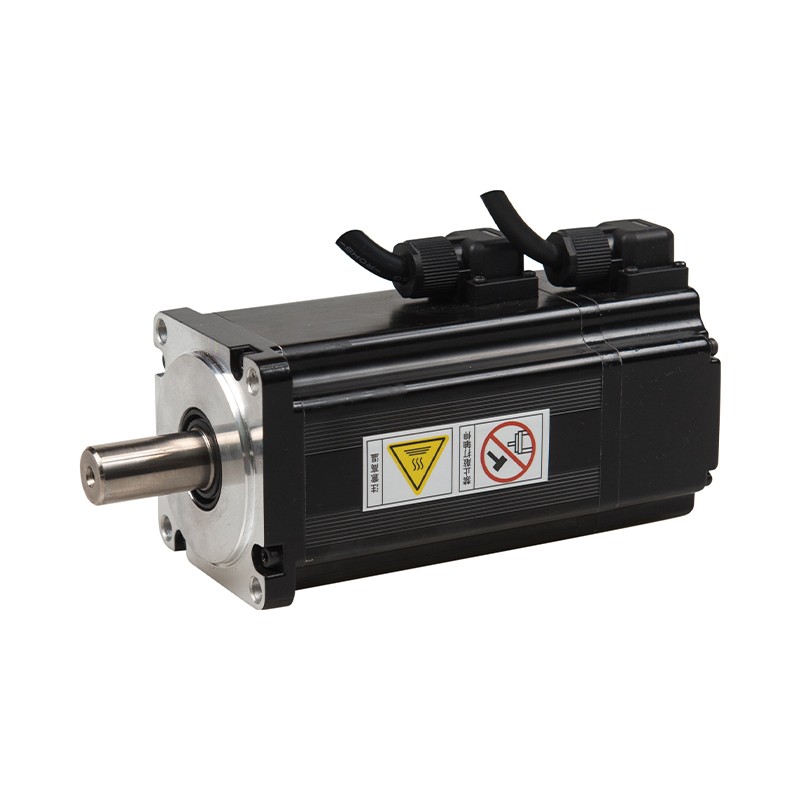
Choosing between an AC servo motor and a DC servo motor is one of the most critical decisions in industrial automation design. While AC systems dominate heavy-duty, high-voltage (220-380VAC) manufacturing lines, modern brushless DC (BLDC) and low-voltage (24-48VDC) systems are revolutionizing mobile robotics and collaborative robots. In this comprehensive guide, we break down the technical differences, thermal dynamics, and cost implications to help engineers select the optimal drive. Discover how premier manufacturers like Baolong Motor are bridging the gap with high-torque-density solutions ranging from 22mm to 130mm.
Key Takeaways
AC servo motors deliver top speed, high precision, and quick cooling for heavy machinery.
DC servo motors provide cost-effective power for simple, low-voltage, or battery-operated mobile equipment.
Brushless BLDC designs eliminate brush wear to lower maintenance costs and extend motor lifespan.
Engineers select the best motor by matching voltage needs, precision requirements, and total budget.
Understanding DC Servo Motor Technology
Mechanics of Brushed DC Servo Motors
The operational dynamic of the DC servo motor rests on direct magnetic interaction between the armature and the field poles. Carbon brushes maintain mechanical contact with the rotating commutator segments to route electric current into the rotor coils. This continuous physical wiping motion delivers fast direct-current mechanical response. However, carbon contact introduces mechanical friction and electric arcs that require regular maintenance.
Source | Reported Brush Life / Inspection | Maintenance Qualifier |
|---|---|---|
Industry Standard (NEMA/IEC) | 2,000–5,000 operating hours | Actual life depends on design, current, speed, and environment. |
Typical Manufacturer Data | 1,000–3,000 operating hours | Brush material, temperature, and environment affect total wear. |
Harsh Environment Testing | 500–2,000 operating hours | Airborne dust and chemical vapors accelerate early brush wear. |
Engineers often select a traditional brushed DC servo motor for basic motion axes with high starting torque requirements. Drive controllers change applied armature voltage to regulate output torque instantly. Simple linear power supplies run these systems efficiently without complex power electronics. Nevertheless, high current density across moving contacts produces thermal energy that remains trapped inside the central armature assembly. High internal heat limits continuous force generation under severe duty cycles.
Evolution of Brushless DC Servo Motors
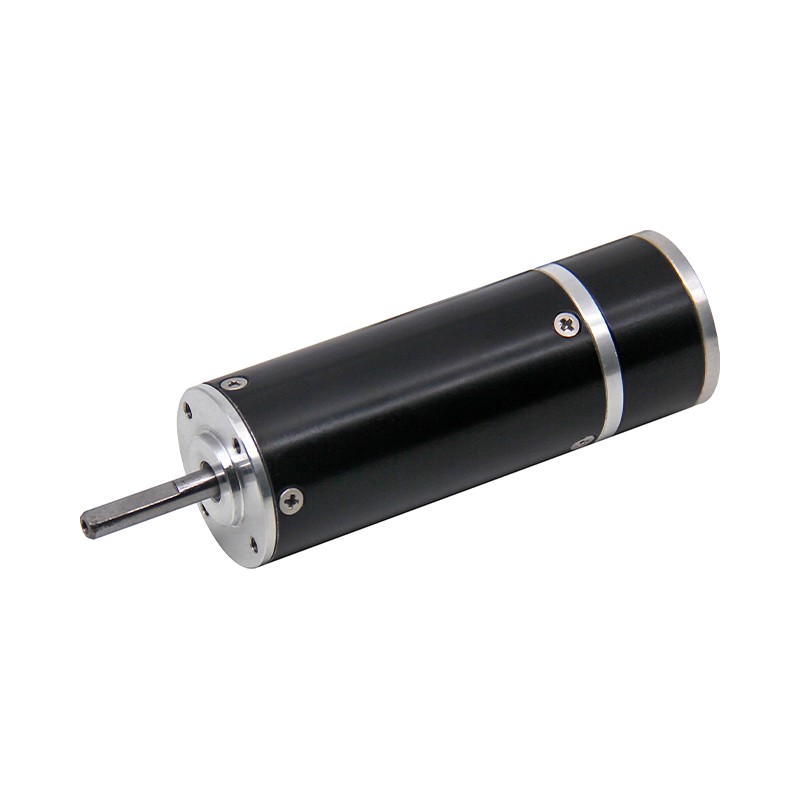
Modern BLDC technology replaces mechanical commutators with electronic drive switching circuits. Permanent magnets mounted directly on the central rotor remove the need for physical sliding carbon contacts. The surrounding housing holds stationary stator phase windings. Heat conducts directly outward from stator coils to external housing surfaces. This structural rearrangement improves motor cooling performance significantly.
Performance Metric | Brushed DC Drive | Brushless BLDC Drive |
|---|---|---|
Torque Density | 0.3–0.7 Nm/kg | SPM: 0.75–1.05 Nm/kg; IPM: 1.05–1.45 Nm/kg |
Operating Temperature | Thermal stress requires derating above 25–40 °C | Proper heat sinks allow operation from -30 to +70 °C |
System Efficiency | 75–80% drive efficiency | 85–93% energy conversion efficiency |
Typical MTBF reaches 1,000–3,000 h | Common MTBF exceeds 10,000 h up to 30,000 h |
Closed-loop digital controls rely on precise feedback sensors to synchronize stator phase excitation with internal rotor movement. Modern BLDC industrial motion systems use specific sensing components to feed operational positional data to the external servo drive controller:
Integrated digital Hall effect sensors detect basic magnetic pole transitions for primary commutation sequencing.
Optical encoders, magnetic encoders, or resolvers provide precise angular feedback to maintain continuous closed-loop position monitoring.
Heavy-duty absolute resolvers deliver durable rotational feedback inside harsh factory environments containing severe vibration.
The advanced BLDC unit functions as a high-performance DC servo motor for dynamic industrial automation. Eliminating brush friction allows the servo motor assembly to reach top operating speeds cleanly. A BLDC servo system provides exceptional durability, low maintenance overhead, and steady torque delivery across demanding industrial processing applications.
Understanding AC Servo Motor Design
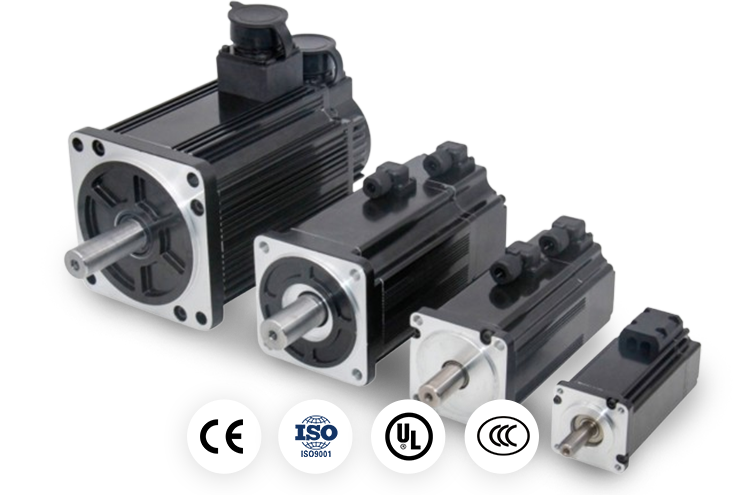
An AC servo motor delivers exceptional dynamic performance and precise velocity tracking under unpredictable operating conditions. Stator windings generate a rotating magnetic field that drives the rotor without mechanical brushes. Modern high-efficiency engineering optimizes electromagnetic circuits inside these units. Manufacturers like Baolong Motor reduce thermal temperature rise by up to 20% while shortening total motor length by 15%. This structural refinement increases power density for demanding production environments.
Factor | AC Servo Motors | |
|---|---|---|
Voltage Sensitivity | Less affected by voltage and temperature fluctuations | Highly susceptible to voltage changes and thermal variations |
Response and Control | Low-inertia rotors allow instant speed corrections | Struggles with rapid changes during high-speed operation |
Power Density | Higher power density supports compact system designs | Lower power density limits heavy high-speed tasks |
Synchronous AC Servo Systems
A synchronous AC servo motor uses permanent magnets embedded on the rotor surface to lock into step with the stator magnetic field. This construction enables exact speed control because rotation speeds match the applied AC power frequency directly. Drive controllers utilize field-oriented control algorithms to regulate motor currents precisely:
Stator currents transform into a rotating d-q reference frame to separate flux control from torque control.
Proportional-integral controllers adjust torque and flux references in about 5–10 ms to correct load variations.
Decoupling terms eliminate cross-coupling effects during rapid speed or direction changes.
This closed-loop system acts like a separately excited machine. Consequently, the industrial servo motor maintains constant force across every rotational angle.
Induction AC Servo Systems
An induction servo motor relies on electromagnetic induction to generate secondary magnetic fields inside a squirrel-cage rotor. The motor drives heavy machinery smoothly. Rotor slip allows continuous heat dissipation, which keeps the AC servo motor cool during high-duty cycles.
Factory lines experience frequent mains supply shifts. An AC servo motor maintains stable output speeds during sudden input changes. Advanced drive electronics compensate for line dropouts. Consequently, this resilient servo motor setup prevents process errors across continuous manufacturing operations.
Technical Servo Motor Comparison
Speed-Torque Characteristics and Peak Output
A thorough drive comparison reveals how mechanical motor construction directly influences dynamic output characteristics. Automation engineers evaluate continuous torque limits alongside real-time electronic processing capabilities when specifying high-performance industrial equipment.
An AC servo motor delivers higher continuous torque under heavy thermal loads. Superior heat dissipation and advanced stator insulation allow this servo motor to maintain steady force output during continuous 24/7 manufacturing operations. Thermal derating affects an AC servo motor less severely during temporary mechanical overload conditions.
In contrast, a DC servo motor experiences significant thermal buildup inside compact sealed housings. Internal heat accumulation restricts allowable continuous output as rotational speeds increase. Therefore, motion designers select a DC servo motor primarily for intermittent or moderate-load industrial processes.
Performance Aspect | AC Servo Motor | DC Servo Motor |
|---|---|---|
Continuous Torque | Higher continuous torque under thermal load | Lower continuous torque capacity |
Thermal Derating | Less severe; supports 24/7 continuous operation | More pronounced in compact sealed housings |
Practical Application | Ideal for heavy industrial duty cycles | Best for intermittent or moderate-load axes |
Control Precision and Sinusoidal PWM Drive Electronics
Control precision relies on core measurable performance metrics including overshoot, rise time, peak time, settling time, and steady-state error. Digital signal processors execute the primary position loop at about 1 kHz and the inner torque loop at 10–20 kHz. High update frequencies maintain mechanical stiffness against external disturbance forces.
An electronic inverter executes field-oriented control algorithms with a broad control bandwidth of 500–2000 Hz. Systems equipped with a 20-bit absolute encoder supply over one million counts per revolution. This high resolution achieves exact position control down to 0.001 degrees. Multi-axis CNC machining centers maintain sub-micron position accuracy across every coordinated axis.
A modern BLDC motor configuration provides smooth speed control across flexible material handling systems. BLDC drives deliver clean rotational torque without physical brush wear. Integrating a high-performance servo motor requires matching update rates with encoder feedback. This technical servo motor comparison helps engineers specify optimal components for automated production systems.
Reliability, Maintenance, and Operating Costs
Operational Lifespan and Thermal Management
Thermal efficiency directly determines the operational lifespan of a servo motor in continuous production settings. Internal friction and electrical resistance generate excessive heat within the core motor components. An AC servo motor dissipates heat efficiently through its outer stator housing. Stator coils connect directly to the exterior frame, so heat moves quickly away from sensitive internal parts. This effective thermal management lowers operational thermal stress significantly. Lower internal temperatures protect electrical winding insulation from rapid degradation over long operating cycles.
Conversely, a DC servo motor traps significant thermal energy within its central armature. Moving mechanical contacts create additional frictional heat during high-speed rotation. Heat stays locked inside the spinning rotor because air gaps impede thermal transfer to the outer housing. High internal heat limits continuous force generation under severe duty cycles. Brush wear also releases conductive carbon dust throughout the motor enclosure over time. Accumulated carbon debris causes internal short circuits and speeds up component degradation. Eliminating physical brushes reduces regular servicing needs while ensuring steady performance across demanding industrial axes.
Initial Investment Versus Long-Term Maintenance Costs
System integrators analyze upfront purchase prices alongside long-term operating expenses when choosing continuous automation components. Basic brushed options provide the lowest entry expense for simple machine builds. Advanced electronic drives increase initial equipment expenses for brushless and alternating-current architectures.
System (motor + drive) | Relative initial purchase cost vs brushed DC servo baseline |
|---|---|
Brushed DC servo with analog/simple PWM drive | 1.0 (baseline; lowest cost) |
Similarly sized BLDC with trapezoidal drive | 1.2 - 1.8 |
AC servo with sinusoidal vector drive | 1.5 - 2.5; the drive is often more expensive than the motor |
Long-term maintenance expenses offset initial price savings over multi-year production schedules. Simple brushed drive systems require frequent manual inspections to replace worn carbon brushes and resurface dirty commutators. Maintenance downtime increases operational costs over time. In contrast, an industrial servo motor using alternating-current technology eliminates wearing sliding contacts entirely. Sealed bearing assemblies extend operational lifespans past tens of thousands of hours without manual interventions. Selecting an AC servo drive system reduces unscheduled downtime and maximizes total equipment availability.
Selecting an Industrial Servo Motor for Your Application
Selecting the ideal industrial servo motor requires a clear evaluation framework. Engineers must evaluate primary voltage inputs ranging from 24VDC to 380VAC. They must also choose appropriate feedback devices like absolute encoders or resolvers, and verify IP65 protection ratings for harsh environments.
Selection Criterion | Low-Voltage / Mobile Systems | Heavy High-Precision Machinery |
|---|---|---|
Supply Voltage | 24VDC to 48VDC | 220VAC to 380VAC |
Feedback Mechanism | Incremental encoders or Hall sensors | Absolute encoders or resolvers |
Ingress Protection | Standard or IP65 enclosure | IP65 or higher sealed frame |
High-Precision Heavy Machinery Use Cases
An AC servo motor provides superior dynamic response and power density for demanding heavy machinery. High-precision CNC machining centers and robotic arms require exact position control under heavy loads. Systems using a high-resolution AC servo motor achieve accurate rotational positioning down to 0.001 degrees. Advanced linear drives even reach target position repeatability below ±1 µm during high-speed cutting routines.
Heavy-duty robotics depend on high torque outputs to manage sudden payload variations without losing sync. Stationary stator coils quickly transfer heat outward, maintaining steady force generation during continuous manufacturing cycles. These robust drives withstand dusty industrial conditions while protecting operational accuracy.
Low-Voltage Mobile and Cost-Sensitive Applications
Mobile platforms and battery-powered automation rely heavily on flexible direct-current designs. A traditional brushed DC servo motor offers simple mechanics for basic auxiliary axes. Meanwhile, a brushless BLDC drive delivers high energy efficiency for battery-driven logistics equipment. A standard standalone servo motor choice may vary based on exact budget constraints.
A modern BLDC servo system eliminates mechanical brush wear completely. Integrators often choose a compact DC servo motor for tight spaces inside mobile drive units. A low-voltage DC servo motor operates efficiently off 24VDC battery power. Premier manufacturers deliver customizable solutions featuring base sizes from 22mm to 130mm. These custom packages integrate specialized shaft profiles, magnetic encoders, and integrated servo drive accessories. System builders easily deploy these tailored motor packages across collaborative robotics, logistics, and cost-sensitive servo motion tasks. Every targeted application benefits from optimized torque delivery and low operating overhead.
Selecting drive technology requires balancing precision against cost. An AC servo motor provides top positioning accuracy, rapid thermal dissipation, and high power density for complex manufacturing tools. Conversely, a DC servo motor offers an economical solution for basic, low-voltage, or battery-powered motion tasks.
System integrators can follow a clear selection path for automated machinery. First, evaluate line voltage, operational duty cycle, and required feedback precision. Choose alternating-current architecture for continuous high-speed industrial processing. Select direct-current options for cost-sensitive axes or mobile robotic applications. Matching drive hardware to specific dynamic loads ensures optimal system efficiency and reliable servo motor performance across all industrial automation axes.
Need Help Sizing Your Servo Motor?
Whether you need a robust 3KW 380VAC AC Servo Motor for heavy machinery or a compact 24VDC BLDC Motor for your next AGV project, Baolong Motor's engineering team is ready to help.
FAQ
What main factor differentiates an AC servo motor from a DC servo motor?
Power source design creates the primary difference. An AC servo motor handles high-voltage alternating current for steady thermal operation. Conversely, a DC servo motor runs on direct current power. This unit suits budget-conscious setups or mobile systems.
When should engineers specify a DC servo motor instead of AC models?
Engineers select a DC servo motor for low-voltage, battery-powered axes. This budget-friendly servo option delivers simple control mechanics. It provides dependable starting torque for lighter automation tasks.
How does a BLDC drive maintain target position accuracy?
A BLDC servo driver receives feedback from absolute encoders or resolvers. The controller adjusts motor currents continuously. This closed-loop control fixes rotational deviations instantly to hold the exact position under changing dynamic loads.
Why is a servo motor preferred over standard motors in automation?
A high-performance servo motor uses closed-loop feedback for rapid speed adjustments. Integrating an industrial servo motor eliminates steady-state position errors. The modern servo motor system delivers exceptional power density across every demanding industrial application.