









Brushless Gear Motor vs. Brushless DC Motor: Which Is Best for Your Application?
 Nov 06, 2025|
 View:3418
Selecting the right motor technology depends on application requirements. A brushless dc motor excels in high-speed applications where compact size and efficiency matter. A gearbox brushless motor delivers superior torque at lower speeds, making it ideal for heavy-load operations.
The global market for brushless motors continues to expand, with applications spanning industrial automation, robotics, and precision equipment. Engineers increasingly recognize the performance advantages of brushless technology over traditional brushed motors.
This guide helps readers quickly determine which motor type fits their project requirements.
Key Takeaways
- Brushless DC motors excel in high-speed, lightweight applications where efficiency and compact design are priorities.
- Gearbox brushless motors provide high torque at reduced speeds, ideal for heavy-load and precision positioning applications.
- Both motor types eliminate brush maintenance, offering longer service life than traditional motors.
- Standard brushless dc motor units achieve 85-95% efficiency in optimal operating ranges.
- Gearbox brushless motor assemblies integrate reduction internally, simplifying system design and reducing footprint.
- Cost analysis must consider total system expenses, including external gearboxes when needed.
- Application environment significantly impacts motor selection, with factors like moisture and temperature affecting performance.
- For reliable motor solutions, partnering with experienced manufacturers ensures optimal performance and support.
Brushless DC Motor Basics
BLDC Construction
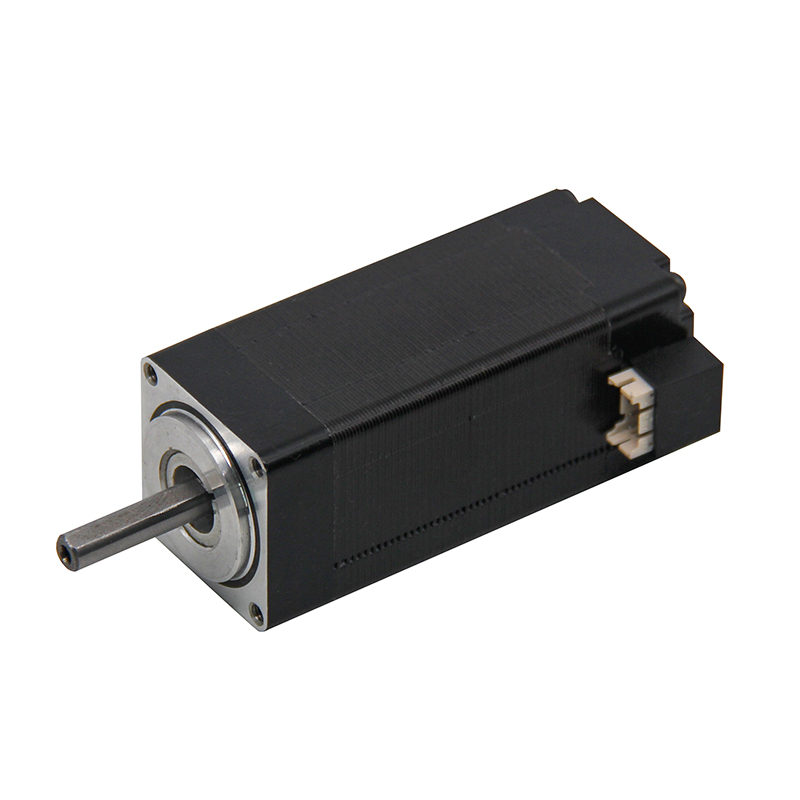
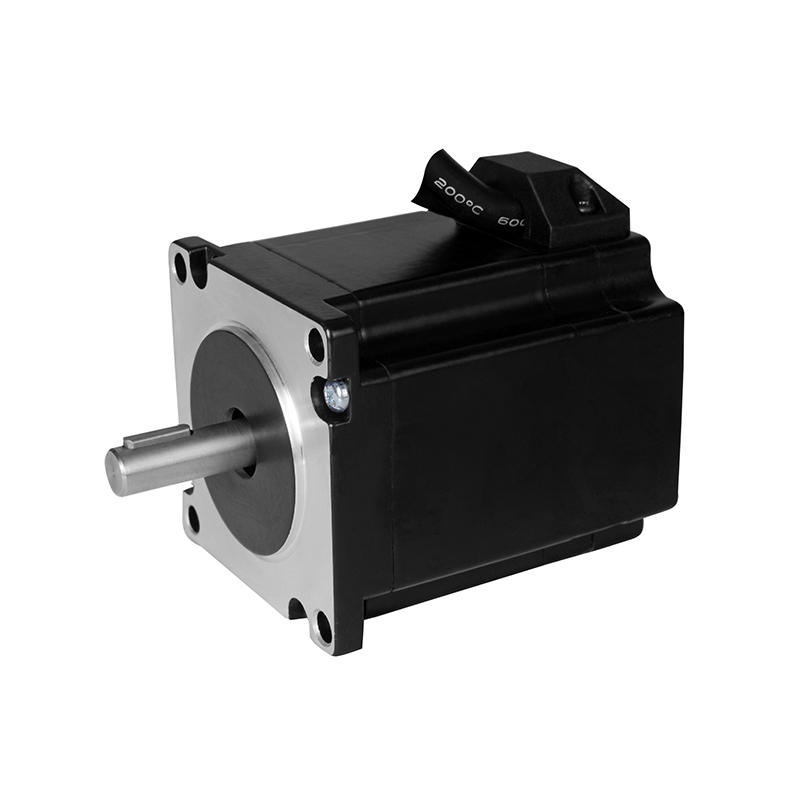
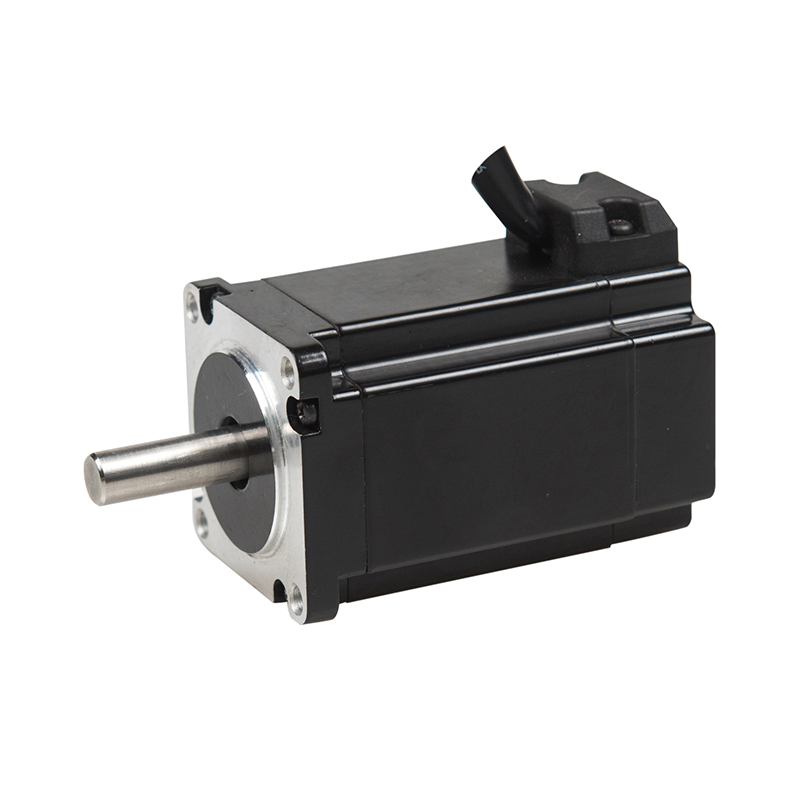
A brushless dc motor features electronic commutation instead of mechanical brushes. Manufacturers design these motors with permanent magnets mounted on the rotor and electromagnetic coils positioned in the stator. The electronic commutation system precisely controls coil activation, creating rotating magnetic fields that drive the rotor. This construction eliminates the friction and wear associated with brush contact. The typical brushless dc motor operates efficiently across a wide speed range, from 3,000 to 50,000 RPM depending on design specifications. Motor size varies based on power requirements, with compact units measuring just 20-40mm in diameter for low-power applications.
Tip: The following table summarizes standard brushless dc motor types and their construction characteristics.
| Motor Type | Speed Range | Construction Method |
Outrunner BLDC | 2,000-8,000 RPM | Magnets rotate around stationary coils, higher torque output |
Inrunner BLDC | 10,000-50,000 RPM | Coils surround rotating magnet core, higher speed capability |
Slotless BLDC | 5,000-30,000 RPM | Smooth coil winding without iron teeth, reduced cogging torque |
Sensorless BLDC | Variable | Back-EMF detection for commutation, simplified wiring |
Sensored BLDC | Variable | Hall sensors provide precise position feedback for control |
BLDC Features
The brushless dc motor stands out for its superior efficiency and minimal maintenance requirements. Electronic commutation eliminates brush wear, extending service life to 20,000+ hours in typical applications. The motor delivers consistent torque across its operating range with minimal heat generation. Efficiency typically reaches 85-95% at optimal load points, significantly exceeding brushed motor performance.
Electromagnetic interference remains low due to the absence of brush arcing. The motor responds quickly to control inputs, enabling precise speed and position regulation. Compact designs offer high power density, making them suitable for space-constrained installations.
| Feature | Description |
Efficiency | 85-95% efficiency at rated load Minimal heat generation during operation Reduced energy consumption compared to brushed motors |
Longevity | No brush replacement required Sealed bearings protect internal components |
Speed Control | Precise electronic speed regulation Wide speed range capability Rapid response to control signals |
Size | High power-to-weight ratio Compact dimensions for tight spaces Lightweight construction for mobile applications |
Noise | Quiet operation without brush friction Minimal electromagnetic interference Smooth torque delivery reduces vibration |
BLDC Applications
Engineers select brushless dc motor technology for applications requiring high speed, efficiency, or compact dimensions. The motor excels in cooling fan systems, where constant high-speed rotation maintains airflow. Drone manufacturers favor these motors for their exceptional power-to-weight ratio. Computer peripherals such as hard drives and optical drives utilize brushless dc motor units for reliable, quiet operation.
Medical equipment designers specify these motors for surgical tools and diagnostic devices. The motor appears in cordless power tools, providing portable high-performance operation. Electric vehicle applications leverage brushless dc motor efficiency for extended battery life.
- Cooling systems and ventilation fans
- Drone and aircraft propulsion
- Computer hard drives and optical drives
- Medical devices and surgical tools
- Cordless power tools
- Electric bicycles and scooters
- Automotive applications (pumps, fans)
Note: Standard brushless dc motor units deliver optimal performance in applications where high speed matters more than high torque.

Gearbox Brushless Motor Overview
Gear Motor Structure
A gearbox brushless motor combines electronic commutation technology with integrated gear reduction. Manufacturers assemble these units by coupling a brushless dc motor to a precision gearbox within a single housing. The gearbox typically employs planetary, spur, or helical gear arrangements depending on torque and efficiency requirements. Planetary gears offer compact design with high reduction ratios, while spur gears provide cost-effective solutions for moderate loads.
The integrated design eliminates external coupling hardware and simplifies installation. Standard gear ratios range from 3:1 to 100:1, with custom ratios available for specialized applications. Output shaft configurations vary to accommodate different mounting requirements and load connections.
| Manufacturer Type | Gear Ratio Range | Structural Design |
Planetary Gear Motor | 3:1 to 100:1 | Compact, coaxial design with multiple planet gears High torque density and efficiency Multiple reduction stages for high ratios |
Spur Gear Motor | 3:1 to 50:1 | Parallel shaft configuration Simple, cost-effective design Suitable for moderate torque applications |
Helical Gear Motor | 5:1 to 100:1 | Angled tooth design reduces noise Smooth power transmission Higher load capacity than spur gears |
Note: The integrated design of gearbox brushless motor units provides self-contained torque multiplication without external components.
Gear Motor Features
The gearbox brushless motor offers distinct advantages for torque-intensive applications. Gear reduction multiplies motor torque by the gear ratio while proportionally reducing output speed. A 10:1 ratio transforms a high-speed, low-torque brushless dc motor into a powerful actuator capable of moving heavy loads. The integrated gearbox eliminates alignment issues and reduces system complexity.
Engineers value these motors for their ability to hold position under load without power consumption. The gear train's mechanical advantage prevents back-driving in most configurations. System efficiency typically ranges from 70-85%, accounting for gear friction losses. The enclosed design protects gears from contamination, extending service life in harsh environments.
- High torque multiplication for heavy loads
- Reduced output speed for controlled motion
- Self-contained design simplifies installation
- Position holding capability without brake
- Sealed gearbox protects components
- Reduced current draw at working speed
Gear Motor Applications
Designers specify gearbox brushless motor technology for applications demanding high torque, precise positioning, or slow-speed control. Industrial automation systems rely on these motors for conveyor drives, where consistent torque moves products reliably. Robotic applications use gear motors for joint actuation, providing the force needed for manipulation tasks.
Automated door systems benefit from the motor's high starting torque and smooth operation. Medical equipment such as patient beds and surgical tables employ gear motors for safe, controlled positioning. Agricultural machinery uses these motors for augers and feed systems.
| Application Type | Description |
Conveyor Systems | Reliable material handling with consistent torque |
Robotic Actuators | Precise joint positioning with high force output |
Automated Gates | High breakaway torque for heavy barrier movement |
Medical Equipment | Smooth, controlled positioning for patient safety |
AGV/AMR Drives | Traction power for autonomous vehicle navigation |
Packaging Machines | Synchronized motion for product handling |
Agricultural Equipment | Auger drives and feeding systems |
Tip: Gearbox brushless motor solutions provide optimal performance when applications require torque output exceeding what standard brushless dc motor units deliver.

Performance Comparison
Speed Characteristics
The performance difference between a standard brushless dc motor and a gearbox brushless motor becomes most apparent in speed characteristics. A typical brushless dc motor operates efficiently between 3,000 and 30,000 RPM, with some specialized units reaching 50,000 RPM or higher. This high-speed capability suits applications like cooling fans, where rapid rotation generates airflow, or power tools requiring fast cutting action.
In contrast, a gearbox brushless motor trades maximum speed for torque multiplication. The gear reduction slows output rotation to ranges between 10 and 3,000 RPM, depending on the selected gear ratio. This speed reduction enables precise control at lower velocities, essential for positioning applications. A 20:1 gear ratio transforms a 6,000 RPM motor into a 300 RPM output, providing smooth, controlled motion.
Engineers must evaluate application speed requirements carefully. High-speed operations favor standard brushless dc motor designs, while controlled low-speed tasks benefit from gearbox brushless motor configurations.
Torque Output
Torque characteristics distinguish these motor types significantly. A brushless dc motor delivers torque proportional to its physical size and current draw. While efficient, the motor typically produces modest torque at high speeds. For example, a 100W brushless dc motor operating at 10,000 RPM generates approximately 0.095 Nm of torque.
A gearbox brushless motor multiplies this torque by the gear ratio. Using the same 100W motor with a 20:1 reduction, output torque increases to approximately 1.9 Nm (accounting for 90% gear efficiency). This multiplication enables the motor to move heavy loads or overcome high resistance. The gear train's mechanical advantage also provides holding torque when stationary, preventing back-driving under load.
The table below illustrates torque multiplication effects:
| Configuration | Motor Speed | Output Speed | Motor Torque | Output Torque |
Direct Drive BLDC | 10,000 RPM | 10,000 RPM | 0.095 Nm | 0.095 Nm |
10:1 Gear Ratio | 10,000 RPM | 1,000 RPM | 0.095 Nm | 0.86 Nm |
20:1 Gear Ratio | 10,000 RPM | 500 RPM | 0.095 Nm | 1.71 Nm |
50:1 Gear Ratio | 10,000 RPM | 200 RPM | 0.095 Nm | 4.28 Nm |
Efficiency Analysis
Efficiency determines operating costs and thermal management requirements. A brushless dc motor achieves peak efficiency of 85-95% within its optimal operating range. This efficiency remains consistent across most of the speed range, with slight reductions at very low or very high speeds. The motor generates minimal heat, reducing cooling requirements and extending component life.
A gearbox brushless motor experiences additional losses through gear friction. Each gear stage typically loses 3-7% of input power, depending on gear type and quality. A single-stage planetary gearbox might achieve 92-95% efficiency, while multi-stage reductions see cumulative losses. Overall system efficiency for a gearbox brushless motor typically ranges from 70-85%.
However, efficiency comparisons must consider complete systems. When a standard brushless dc motor requires an external gearbox to meet torque requirements, total efficiency often matches or falls below an integrated gearbox brushless motor solution. The integrated design eliminates coupling losses and optimizes component matching.
Tip: For applications requiring torque multiplication, gearbox brushless motor units often provide better overall system efficiency than separate motor and gearbox combinations.
Environmental Considerations
Temperature Performance
Operating temperature significantly affects motor performance and longevity. A standard brushless dc motor generates heat primarily through copper losses in the windings and iron losses in the core. At rated load, winding temperature typically rises 40-60°C above ambient. The motor's thermal design determines continuous power capability, with better cooling enabling higher sustained output.
A gearbox brushless motor adds heat generation from gear friction. The enclosed gearbox traps heat, potentially elevating internal temperatures. Quality manufacturers design gear chambers with adequate heat dissipation paths. Some units incorporate cooling fins or require external airflow for optimal thermal management. Operating in high ambient temperatures may necessitate derating motor output to prevent overheating.
Engineers should verify temperature specifications match application conditions. Motors rated for continuous duty in 40°C ambient may require reduced power in 60°C environments. The motor's thermal protection features, such as over-temperature shutdown, protect against damage in demanding conditions.
Moisture and Dust Protection
Environmental protection levels determine where motors can safely operate. Most brushless dc motor units carry IP ratings indicating their resistance to particle and moisture ingress. Standard ratings include IP54 (protected against dust and water splashing) and IP65 (dust-tight and protected against water jets). Higher ratings like IP67 enable temporary submersion.
A gearbox brushless motor requires careful sealing at shaft penetrations and housing joints. Quality designs incorporate sealed bearings and O-ring seals to protect internal components. The gearbox chamber particularly benefits from effective sealing, as gear lubricant contamination reduces efficiency and accelerates wear.
Food processing, outdoor installations, and washdown environments demand higher IP ratings. A properly sealed gearbox brushless motor withstands these conditions while maintaining performance. Engineers should specify IP ratings appropriate to the installation environment rather than relying on standard ratings.
| IP Rating | Protection Level | Suitable Environments |
IP54 | Dust protected, splash resistant | Indoor industrial, light outdoor |
Dust-tight, jet resistant | Outdoor, moderate washdown | |
Dust-tight, submersion resistant | Harsh outdoor, heavy washdown | |
IP69K | Dust-tight, high-pressure washdown | Food processing, pharmaceutical |
Control Requirements
Drive Electronics
Both motor types require electronic controllers for operation, but control complexity differs. A brushless dc motor needs a controller that provides proper commutation timing. The controller switches current through motor phases in sequence, creating the rotating magnetic field. Simple controllers use six-step commutation for basic applications, while advanced drives employ field-oriented control (FOC) for maximum efficiency and smooth operation.
A gearbox brushless motor uses the same control principles for the motor section. However, the controller must account for the gearbox's increased inertia. Acceleration and deceleration ramps require adjustment to prevent excessive current draw and mechanical stress. The controller's current limiting features become particularly important, as high gear ratios can generate substantial mechanical forces during rapid speed changes.
Modern controllers offer programmable parameters for motor matching, allowing optimization for specific configurations. Features like regenerative braking prove valuable for gearbox brushless motor applications involving frequent starts and stops or vertical load movements.
Position Feedback
Precise positioning applications often require feedback sensors. A standard brushless dc motor typically integrates well with encoders or resolvers mounted to the motor shaft. High motor speeds mean encoder resolution directly affects position accuracy. A 1,000-pulse encoder on a 10,000 RPM motor provides 10,000,000 pulses per minute, enabling fine position control.
A gearbox brushless motor simplifies feedback requirements through speed reduction. The same 1,000-pulse encoder on a 500 RPM output (20:1 reduction) generates 500,000 pulses per minute, still providing excellent resolution. Alternatively, lower-resolution encoders can achieve adequate accuracy, reducing system cost. Some applications place encoders on the output shaft for direct position measurement, eliminating concerns about gear backlash.
The gear ratio also affects feedback signal processing. Controllers must account for the mechanical advantage when converting position commands to motor motion. Properly configured systems achieve positioning accuracy within a few encoder counts, suitable for most industrial applications.
Note: When selecting between motor types, consider how gear reduction affects control system complexity and feedback requirements.
Cost Analysis
Initial Investment
Initial purchase price differs significantly between motor types. A standard brushless dc motor typically costs less than an equivalent gearbox brushless motor due to simpler construction. For example, a 200W brushless dc motor might retail for $80-150, while a comparable gearbox brushless motor with integrated reduction costs $180-300, depending on gear ratio and quality.
However, complete system costs require broader analysis. Applications needing torque multiplication must add external gearbox costs to the brushless dc motor price. A quality planetary gearbox matching a 200W motor costs $100-200, plus coupling hardware and mounting components. This configuration often exceeds the cost of an integrated gearbox brushless motor solution.
Engineers should compare:
- Brushless DC Motor: Motor + External Gearbox + Coupling + Mounting Hardware
- Gearbox Brushless Motor: Single Integrated Unit
The integrated solution frequently proves more cost-effective while reducing assembly time and potential alignment issues.
Installation Expenses
Installation costs significantly impact total project budgets. A standard brushless dc motor requiring an external gearbox demands careful alignment between components. Misalignment causes excessive wear, vibration, and premature failure. Professional installation or precision mounting hardware adds expense. The separate components also require more space, potentially complicating machine design.
A gearbox brushless motor simplifies installation with its pre-aligned, single-unit construction. Technicians mount the motor using standard brackets and connect the output shaft directly to the load. Installation time typically decreases by 30-50% compared to separate motor and gearbox assembly. Reduced installation time lowers labor costs and accelerates project completion.
The table below compares typical installation factors:
| Factor | Brushless DC Motor + External Gearbox | Gearbox Brushless Motor |
Component Alignment | Critical, requires precision tools | Pre-aligned at factory |
Installation Time | 2-4 hours for complex systems | 1-2 hours typical |
Required Skills | Experienced technician | Standard mechanical skills |
Mounting Space | Larger footprint required | Compact, integrated package |
Adjustment Needs | Coupling tension, alignment checks | Minimal adjustment required |
Lifecycle Costs
Long-term operating expenses determine true cost of ownership. A brushless dc motor operating within specifications requires minimal maintenance. Sealed bearings typically last 20,000+ hours before replacement. The absence of brushes eliminates the most common wear component. Energy efficiency of 85-95% reduces electricity costs during continuous operation.
A gearbox brushless motor adds gear maintenance considerations. Quality sealed gearboxes operate 10,000-15,000 hours before requiring lubrication service. Synthetic lubricants extend maintenance intervals further. The integrated design protects gears from contamination, maximizing component life. Overall system efficiency of 70-85% slightly increases energy consumption compared to direct-drive configurations.
However, lifecycle cost analysis must consider application requirements. If a brushless dc motor cannot deliver required torque without external gearing, the comparison shifts. A properly specified gearbox brushless motor typically demonstrates lower maintenance costs than separate motor-gearbox combinations through reduced component count and better environmental protection.
Tip: Calculate total lifecycle costs including energy consumption, maintenance intervals, and expected component replacement before final selection.
Selection Guidance
Application Assessment
Successful motor selection begins with thorough application analysis. Engineers must quantify load requirements, operating conditions, and performance expectations. The following parameters guide proper motor specification:
Load Analysis: Calculate actual torque at the output shaft, including safety margins for starting conditions. Consider whether loads remain constant or vary during operation. Dynamic loads require motors with adequate thermal capacity for peak demands.
Speed Requirements: Determine whether the application benefits from high-speed operation or requires controlled low-speed movement. High-speed applications favor standard brushless dc motor designs, while precise positioning or heavy loads typically need gearbox brushless motor solutions.
Duty Cycle: Assess whether motors operate continuously or intermittently. Continuous duty requires conservative thermal design and proper cooling. Intermittent duty allows higher peak power with adequate rest periods.
Environmental Factors: Evaluate operating conditions including temperature extremes, moisture exposure, dust levels, and chemical exposure. Match motor protection ratings to actual installation conditions.
Space Constraints: Measure available installation space and access for maintenance. Integrated gearbox brushless motor units often fit tighter spaces than separate motor-gearbox configurations.
Decision Framework
The following framework helps engineers select appropriate motor technology:
Choose a standard brushless dc motor when:
- Application requires high-speed operation (>3,000 RPM)
- Loads remain light with minimal torque requirements
- Rapid acceleration and deceleration cycles occur frequently
- Maximum compactness and light weight are critical
- Direct coupling to high-speed equipment is possible
- Budget constraints favor minimum initial cost
Choose a gearbox brushless motor when:
- Application demands high starting torque
- Output speed requirements fall below 1,000 RPM
- Precise positioning and holding torque are necessary
- Loads exceed standard motor torque capacity
- Installation space is limited (versus separate components)
- Maintenance access is restricted
Require additional analysis when:
- Application cycles between high-speed and high-torque operation
- Environmental conditions approach motor rating limits
- Multiple motors must operate in synchronized motion
- Vertical loads require holding without power consumption
- Regenerative braking or energy recovery is desired
Specification Checklist
Use this checklist to ensure complete motor specification:
□ Output torque calculated at working speed with safety factor
□ Maximum speed requirement defined
□ Operating voltage and available power supply confirmed
□ Duty cycle (continuous or intermittent) specified
□ Ambient temperature range established
□ IP rating required for environment determined
□ Mounting configuration and space constraints measured
□ Feedback requirements (encoder type/resolution) identified
□ Control interface (analog, PWM, CAN, etc.) specified
□ Expected service life and maintenance intervals defined
□ Brake requirements (if any) for vertical loads determined
□ Noise and vibration limits established
□ Certification requirements (UL, CE, etc.) confirmed
| Decision Factor | Brushless DC Motor | Gearbox Brushless Motor |
Optimal Speed Range | 3,000-50,000 RPM | 10-3,000 RPM |
Torque Capability | Low to moderate | Moderate to high |
Installation Complexity | May require external gearing | Integrated solution |
Positioning Accuracy | High (with proper feedback) | Very high (gear reduction aids) |
Maintenance Requirements | Minimal | Low (sealed gearbox) |
Initial Cost | Lower | Higher |
System Cost | Variable (depends on gearing needs) | Generally lower than separate components |
Note: Consultation with motor manufacturers provides technical verification that specifications match application requirements and ensures optimal performance.
BAOLONG Motor Solutions
Why Choose BAOLONG
BAOLONG stands as a leading brushless motor supplier with extensive experience in motion control solutions. The company delivers both standard brushless dc motor and gearbox brushless motor products engineered for demanding applications. BAOLONG employs advanced manufacturing processes to ensure consistent quality across every motor unit. Their product line includes motors ranging from 50W to 5kW, covering diverse industrial and automation needs.
BAOLONG motors demonstrate exceptional performance in automation equipment, robotic systems, and industrial machinery. Their brushless dc motor units offer high efficiency and reliable operation in high-speed applications. The gearbox brushless motor series provides superior torque multiplication with optimized gear train designs. Integrated designs reduce installation time and eliminate alignment concerns.
Engineers value BAOLONG for several advantages:
Comprehensive technical documentation and selection support
Customization capabilities for unique application requirements
Rigorous quality control and performance testing
Responsive engineering team for application consultation
Competitive pricing with reliable delivery schedules
Proven track record across automation and industrial sectors
For projects requiring reliable brushless motor supplier partnerships, BAOLONG provides comprehensive solutions backed by engineering expertise and manufacturing quality. Their motor products address requirements across automation, robotics, and specialized equipment applications.
BAOLONG's Product Range
BAOLONG offers diverse motor solutions to match specific application needs. Their brushless dc motor line includes frameless designs for tight integration, housed motors for standard installations, and high-speed variants for specialized applications. Custom winding options enable voltage matching and performance optimization. Integrated feedback options include encoders, resolvers, and hall sensors for precise control.
The gearbox brushless motor series features planetary gear configurations for high torque density, spur gear options for cost-effective solutions, and right-angle variants for space-constrained installations. Gear ratios span from 3:1 to 100:1, with custom ratios available for unique requirements. Output shaft configurations accommodate various mounting methods and load connections.
BAOLONG's commitment to quality and customer support ensures engineers receive appropriate motor solutions for their applications. Their experienced team assists with motor selection, application analysis, and technical problem-solving throughout the project lifecycle.
Conclusion
Selecting between a brushless dc motor and a gearbox brushless motor depends fundamentally on application-specific speed, torque, and control requirements. Standard brushless dc motor designs excel in high-speed applications where efficiency, compact size, and light weight provide advantages. These motors suit cooling systems, drones, power tools, and rapid positioning applications.
Gearbox brushless motor configurations deliver superior performance when applications demand high torque, controlled low-speed operation, or precise positioning under load. The integrated gear reduction simplifies system design, reduces component count, and often proves more cost-effective than separate motor-gearbox combinations. These motors excel in conveyors, robotics, automated doors, and heavy-duty industrial equipment.
Engineers must evaluate complete system requirements rather than focusing solely on motor specifications. Considerations include torque at working speed, environmental conditions, control requirements, installation constraints, and lifecycle costs. Proper specification ensures optimal motor performance while avoiding over-specification that increases unnecessary expense.
Both motor technologies leverage brushless design advantages including minimal maintenance, long service life, high efficiency, and precise electronic control. Understanding the performance differences enables engineers to specify optimal motor solutions that balance capability, cost, and reliability.
For projects requiring expert guidance on brushless motor selection, partnering with experienced manufacturers ensures access to quality products and technical support. The right motor choice delivers years of reliable operation with minimal maintenance, maximizing return on investment.
FAQ
What is the main advantage of a gearbox brushless motor over a standard brushless dc motor?
A gearbox brushless motor provides significantly higher torque output at reduced speed through integrated gear reduction. This configuration delivers the holding torque and controlled motion needed for heavy loads and precision positioning. Standard brushless dc motor units excel at high speeds with lower torque output.
Can a brushless dc motor be used for applications requiring high torque?
Yes, but the motor typically requires an external gearbox for torque multiplication. This adds system complexity, increases cost, and demands precise component alignment. An integrated gearbox brushless motor often provides a more cost-effective and reliable solution for high-torque applications.
How does efficiency compare between these motor types?
A brushless dc motor achieves 85-95% efficiency at optimal operating points. A gearbox brushless motor experiences additional losses through gear friction, resulting in 70-85% overall system efficiency. However, when comparing complete systems requiring torque multiplication, integrated gear motors often match or exceed the efficiency of separate motor-gearbox combinations.
Which motor type requires less maintenance?
Both motor types require minimal maintenance due to brushless construction. Standard brushless dc motor units need only bearing maintenance every 20,000+ hours. Gearbox brushless motor systems add sealed gearbox maintenance every 10,000-15,000 hours, though quality sealed designs often exceed these intervals. Neither type requires brush replacement.
Are gearbox brushless motors more expensive than standard brushless dc motors?
Initial purchase price is higher for gearbox brushless motor units due to the integrated gearbox. However, total system cost frequently favors integrated solutions when applications require torque multiplication. The comparison must include external gearbox, coupling, and installation costs for standard motors.
Can both motor types operate in outdoor environments?
Yes, when properly specified with appropriate IP ratings. Standard brushless dc motor and gearbox brushless motor variants are available with IP65 or IP67 protection, enabling outdoor installation. Engineers should verify temperature ratings and environmental protection match actual operating conditions.
How do I calculate required gear ratio for my application?
Divide motor speed by desired output speed to determine the required gear ratio. For example, a 6,000 RPM motor requiring 300 RPM output needs a 20:1 ratio. Verify the resulting torque multiplication meets load requirements with appropriate safety margins.
What feedback options work best for position control applications?
Both motor types work well with encoder or resolver feedback. Gearbox brushless motor configurations simplify feedback requirements through speed reduction, allowing lower-resolution encoders to achieve adequate position accuracy. Consider whether feedback mounts to the motor shaft or output shaft based on application precision requirements.