









How Does an Industrial Servo Motor Work? A Complete Guide to Precision Motion Control
 Jun 07, 2024|
 View:2744
Industrial automation has revolutionized manufacturing processes worldwide, and at the heart of this transformation lies the industrial servo motor. Understanding how these precision devices operate is essential for engineers, technicians, and business owners looking to optimize their production systems. This comprehensive guide breaks down the working principles of industrial servo motors in clear, accessible language while providing the technical insights professionals need.
Key Takeaways
Industrial servo motors use closed-loop control systems to achieve precise positioning and speed control with accuracy levels reaching ±0.01 degrees
The system consists of four main components: the motor, encoder, controller, and drive amplifier working in synchronized coordination
Servo motors offer superior torque-to-weight ratios compared to standard motors, delivering up to 300% more torque per unit weight
Applications range from robotics and CNC machinery to automated packaging systems requiring microsecond-level response times
Proper understanding of feedback mechanisms and control algorithms is crucial for optimizing system performance
What Makes an Industrial Servo Motor Different?
An industrial servo motor stands apart from conventional motors through its ability to precisely control position, velocity, and torque. Unlike standard AC or DC motors that simply rotate when powered, servo motors incorporate sophisticated feedback systems that continuously monitor and adjust performance. This closed-loop architecture enables manufacturers to achieve the exacting standards required in modern industrial applications.
The fundamental difference lies in the control methodology. Traditional motors operate in an open-loop system—they receive power and rotate without confirmation of actual movement. In contrast, an industrial servo motor constantly communicates its actual position back to the controller, creating a self-correcting system that eliminates errors in real-time. This capability makes servo motors indispensable in applications where precision matters, from surgical robots to semiconductor manufacturing equipment.
The Core Components: Understanding the Servo System Architecture
To comprehend how an industrial servo motor works, one must first understand its four essential components and how they interact within the control loop.
The Servo Motor Unit
At the core sits the motor itself—typically a brushless DC motor or permanent magnet synchronous motor designed for high-performance applications. These motors feature specialized rotor configurations using rare-earth magnets that provide exceptional power density. The stator windings are precisely wound to minimize cogging torque and ensure smooth operation across the entire speed range. Industrial servo motors typically operate at speeds between 1,000 and 5,000 RPM, though some specialized models can reach 8,000 RPM or higher.
The Feedback Encoder
Attached directly to the motor shaft, the encoder serves as the system's eyes. This device tracks the motor's actual position and velocity with remarkable precision. Modern optical encoders can provide resolution up to 4,194,304 counts per revolution (using 22-bit resolution), enabling position accuracy within micrometers. The encoder continuously sends position data back to the controller, typically at update rates exceeding 8,000 times per second. This rapid feedback forms the foundation of the servo system's ability to correct positioning errors almost instantaneously.
The Servo Drive Amplifier
The drive acts as the power management system, converting control signals into the precise currents needed to drive the motor. Using advanced pulse-width modulation (PWM) techniques, modern servo drives switch power at frequencies between 8 and 32 kHz, providing smooth torque delivery while minimizing electrical noise. The drive also implements protection features, monitoring for overcurrent, overvoltage, and thermal conditions that could damage the motor.
The Motion Controller
This intelligent component serves as the brain of the servo system. The controller receives target position or velocity commands from the machine's programmable logic controller (PLC) or computer numerical control (CNC) system. It then compares these commands with actual feedback from the encoder and calculates the necessary corrections. Modern controllers implement sophisticated algorithms such as PID (Proportional-Integral-Derivative) control, which can maintain position accuracy within milliseconds of command changes.
The Closed-Loop Feedback Mechanism: How Real-Time Correction Works
The defining characteristic of an industrial servo motor system is its closed-loop feedback mechanism. This process operates continuously in a cycle that typically completes thousands of times per second.
First, the controller receives a command signal specifying the desired position, speed, or torque. Simultaneously, the encoder sends real-time data about the motor's current state. The controller compares these two inputs—the desired state versus the actual state—to calculate an error value. This error represents the difference between where the motor should be and where it actually is.
The controller then processes this error through control algorithms to determine the corrective action needed. For position control, even a tiny deviation of 0.001 degrees triggers an immediate response. The controller sends adjustment signals to the servo drive, which modifies the current flowing to the motor windings. This changes the electromagnetic forces acting on the rotor, causing it to accelerate, decelerate, or maintain speed as needed to eliminate the error.
This feedback loop repeats continuously at what engineers call the servo update rate—typically ranging from 1 to 8 kilohertz in industrial applications. At these frequencies, the system can detect and correct deviations in microseconds, long before they become visible or affect product quality. Properly tuned servo systems can maintain positioning accuracy within 20 micrometers even when subjected to variable loads.

Control Algorithms: The Intelligence Behind Precision
The mathematical algorithms running inside the servo controller determine how effectively the system responds to commands and disturbances. While several control strategies exist, PID control remains the most widely implemented in industrial servo motors.
Proportional Control Component
The proportional element responds to the current error magnitude. If the motor is far from its target position, the controller commands strong corrective action. As the error decreases, the correction proportionally reduces. This creates a responsive system that moves quickly toward targets but can sometimes overshoot.
Integral Control Component
The integral element addresses persistent small errors by accumulating error over time. If the motor consistently sits slightly off-target—perhaps due to friction or gravity—the integral component gradually increases corrective force until the error is eliminated. This ensures the industrial servo motor reaches and maintains exactly the commanded position.
Derivative Control Component
The derivative element predicts future error based on the rate of change. If the motor is moving rapidly toward the target, this component applies anticipatory braking to prevent overshoot. This damping action creates smooth, stable movements without oscillation—critical for applications like precision cutting or component placement.
Advanced servo systems may also incorporate feedforward control, which anticipates required torques based on motion profiles rather than waiting for errors to occur. This proactive approach further improves performance in high-speed applications.
Operating Modes: Position, Velocity, and Torque Control
Industrial servo motors can operate in three primary control modes, each optimized for different application requirements.
| Control Mode | Primary Function | Typical Accuracy | Common Applications |
|---|---|---|---|
| Position Mode | Maintains exact angular or linear position | ±0.01° to ±0.001° | CNC machining, pick-and-place robots, 3D printers |
| Velocity Mode | Controls rotational or linear speed | ±0.01% of commanded speed | Conveyor systems, winding machines, printing presses |
| Torque Mode | Regulates force or tension output | ±1% to ±5% of rated torque | Tensioning systems, force-limited assembly, material testing |
Position mode represents the most common implementation for an industrial servo motor. In this mode, the controller continuously adjusts motor current to maintain the commanded position regardless of external forces. When a robotic arm needs to hold a component steady for welding, position mode ensures it remains motionless within micrometers despite vibrations or thermal expansion.
Velocity mode proves essential when consistent speed matters more than exact position. In printing operations, maintaining precise web speed ensures registration between colors. The servo system adjusts torque dynamically to maintain constant velocity even as roll diameter changes, something standard motors cannot achieve.
Torque mode allows the industrial servo motor to function as a force regulator. In automated assembly, this mode enables gentle component insertion—the motor applies just enough force to seat a bearing without damaging delicate parts. The controller monitors current draw (which correlates to torque) and modulates power to maintain the specified force level.
Communication Protocols: How Systems Talk to Each Other
Modern industrial servo motors communicate with controllers through standardized industrial networks. These protocols enable coordinated multi-axis motion and integration with broader factory automation systems.
EtherCAT (Ethernet for Control Automation Technology) has emerged as a leading protocol, offering cycle times below 100 microseconds and the ability to synchronize dozens of axes with high precision. PROFINET and EtherNet/IP provide similar capabilities with slightly different architectural approaches. These real-time networks ensure that command updates and feedback data flow without delays that could compromise motion quality.
Traditional protocols like CANopen and SERCOS still serve many installations, particularly in legacy systems. The choice of protocol affects achievable synchronization accuracy, system response time, and integration complexity. International standards organizations work to ensure interoperability across devices from different manufacturers.
Performance Characteristics That Define Quality
Several key specifications determine whether an industrial servo motor suits a particular application. Understanding these parameters helps engineers select and optimize servo systems.
| Performance Parameter | Typical Range | Impact on Application |
|---|---|---|
| Resolution | 65,536 to 4,194,304 counts/rev | Determines smallest achievable movement increment |
| Settling Time | 20-150 milliseconds | Affects cycle time in point-to-point motion |
| Peak Torque | 2-3× continuous torque | Enables rapid acceleration and deceleration |
| Bandwidth | 50-400 Hz | Defines speed of response to command changes |
| Torque Ripple | <2% to <8% | Affects smoothness at low speeds |
Resolution directly impacts positioning precision. A 20-bit encoder provides over one million distinct positions per revolution, enabling micron-level accuracy in linear axes when combined with fine-pitch lead screws. Higher resolution also reduces quantization noise that can cause slight vibrations in sensitive applications.
Settling time measures how quickly the industrial servo motor reaches and stabilizes at the commanded position. Applications requiring rapid indexing—such as electronic component placement machines that perform thousands of operations per minute—demand settling times below 50 milliseconds. This parameter depends on mechanical load characteristics, tuning aggressiveness, and control algorithm sophistication.
Peak torque capability determines acceleration performance. Servo motors can typically produce 200-300% of their continuous rated torque for brief periods (usually 1-3 seconds). This overload capacity enables quick starts and stops without oversizing the motor for average load conditions, optimizing both cost and machine footprint.

Real-World Applications: Where Precision Makes the Difference
The unique capabilities of industrial servo motors have made them indispensable across diverse sectors. Understanding these applications illustrates why closed-loop control matters in modern manufacturing.
In CNC machining centers, multiple servo axes work in coordination to guide cutting tools along complex three-dimensional paths. The system must maintain positioning accuracy within micrometers while cutting forces vary continuously. Servo-controlled machine tools can hold tolerances of ±0.01mm over extended production runs—something impossible with stepper motors or conventional drives.
Robotic assembly lines depend entirely on servo motor precision. When installing automotive components, robots must position parts within millimeters while applying uniform pressure. The torque control mode of the industrial servo motor provides the force regulation needed to avoid damage while ensuring proper assembly. According to international robotics standards, properly implemented servo systems achieve path accuracy better than ±0.2mm over distances of several meters.
Packaging machinery represents another critical application area. High-speed form-fill-seal machines must synchronize multiple axes—film feeding, product placement, sealing bars—to produce hundreds of packages per minute. The velocity control capabilities of servo systems enable electronic line-shafting, where multiple motors maintain perfect speed relationships without mechanical linkages. This flexibility allows quick changeovers between different product sizes without hardware modifications.
Semiconductor manufacturing pushes servo technology to its limits. Wafer handling systems require positioning accuracy measured in micrometers. These systems use ultra-high-resolution encoders and advanced control algorithms to achieve repeatable accuracy across millions of positioning cycles. The economic stakes are enormous: positioning errors can ruin wafers worth thousands of dollars.
Tuning and Optimization: Maximizing System Performance
Even the finest industrial servo motor requires proper tuning to deliver optimal performance. The tuning process adjusts control parameters to match the specific mechanical characteristics of each application.
Servo tuning typically begins with inertia matching—ensuring the controller's internal model matches the actual mechanical load. When the motor directly drives a known load with specific inertia, the controller can predict required torques more accurately. Most modern servo drives include auto-tuning functions that apply test movements and analyze the system response to automatically set initial PID values.
However, automatic tuning provides only a starting point. Engineers must then fine-tune parameters based on application-specific requirements. High-speed pick-and-place applications prioritize quick response, requiring aggressive proportional and derivative gains. This creates fast, snappy movements but may cause slight overshoot. Conversely, precision grinding operations demand heavily damped motion to avoid surface finish defects, necessitating conservative gain settings even though response time increases.
Feedforward tuning represents an advanced optimization technique. By characterizing the relationship between velocity/acceleration and required torque, the controller can provide anticipatory drive commands. This proactive control reduces position errors during motion, particularly in high-speed contouring applications. Properly implemented feedforward can reduce following error by 70-85% compared to pure feedback control.
Tuning also addresses mechanical resonances that can destabilize servo systems. Every mechanical system has natural frequencies where it prefers to vibrate. If control bandwidth approaches these frequencies, the system may oscillate uncontrollably. Modern servo drives include notch filters that can be precisely tuned to eliminate specific resonant frequencies while preserving response at other frequencies.
Troubleshooting Common Issues
Understanding how an industrial servo motor works also means recognizing typical problems and their solutions. Most issues trace back to feedback integrity, tuning mismatches, or mechanical problems.
Following error alarms occur when the difference between commanded and actual position exceeds tolerance limits. This typically indicates insufficient motor torque for the application, excessive friction in the mechanical system, or overly conservative tuning. Systematic diagnosis involves checking for mechanical binding, verifying proper inertia ratios (ideally below 10:1 for optimal performance), and reviewing load requirements against motor specifications.
Hunting or oscillation problems manifest as continuous small movements around the target position. This usually stems from excessive proportional or derivative gain creating an overly aggressive system. Reducing these parameters typically resolves the issue, though at some cost to response speed. Alternatively, mechanical play or compliance may be allowing the motor to oscillate—addressing these mechanical issues often proves more effective than detuning the servo.
Encoder problems represent another common failure mode. Contamination, shock, or electrical noise can corrupt position feedback, causing erratic behavior. Most servo drives provide diagnostic displays showing encoder signals, allowing technicians to verify signal quality. Encoder failure rates typically remain below 0.5% per year in properly maintained industrial environments, but when failures occur, they usually require encoder replacement.
Future Developments in Servo Technology
Servo motor technology continues evolving to meet increasingly demanding application requirements. Several trends are shaping the next generation of industrial servo motors.
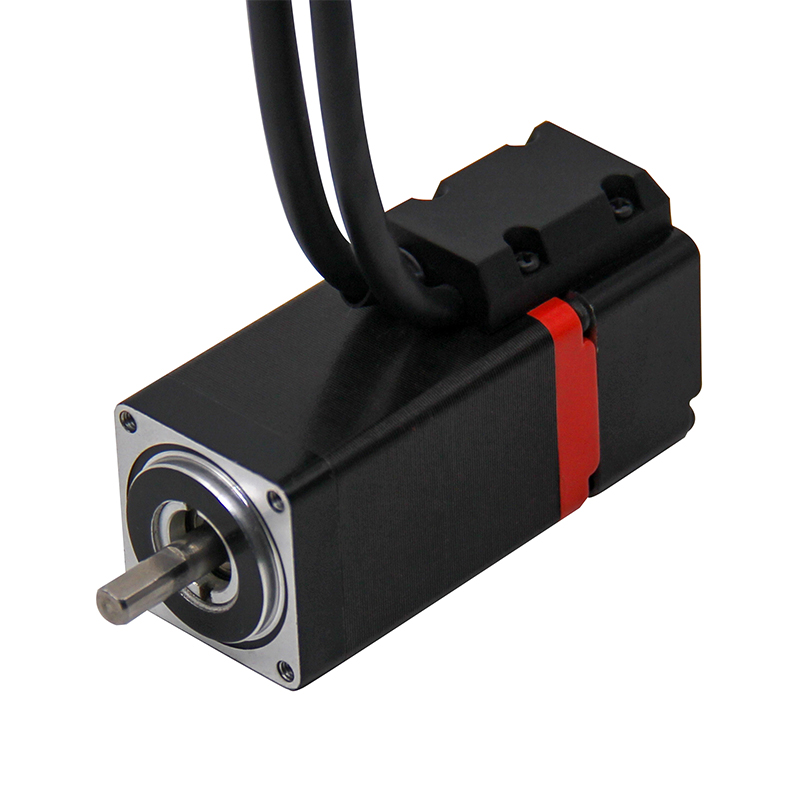
Integrated servo systems combine motor, drive, and controller into single compact units. These all-in-one devices simplify installation and reduce wiring complexity while offering performance comparable to distributed architectures. The integration trend extends to incorporating motion control directly into servo drives, eliminating separate motion controllers for simple applications.
Artificial intelligence is beginning to influence servo control strategies. Machine learning algorithms can optimize tuning parameters automatically by observing system performance over time. These adaptive systems promise to maintain optimal performance as mechanical systems age and characteristics change, reducing the maintenance burden on technical staff.
Functional safety integration represents another important development. Safety-rated servo drives incorporating SIL 2 safety functions enable safe torque-off and safe limited speed directly within the servo system. This reduces external safety circuitry and enables more sophisticated collaborative applications where humans and machines work in close proximity. Organizations like the International Society of Automation develop standards ensuring these safety features meet rigorous requirements.
Higher power density continues advancing as permanent magnet materials and thermal management improve. Modern industrial servo motors achieve torque densities exceeding 0.8 Nm per kilogram of motor weight—significantly higher than previous generations. This trend enables more compact machines with equivalent or improved performance.
Conclusion
Understanding how an industrial servo motor works reveals the sophisticated interplay between mechanical, electrical, and computational systems that enables modern precision manufacturing. The closed-loop feedback architecture—continuously comparing commanded position against actual position and making microsecond-level corrections—delivers the accuracy and repeatability that distinguish servo systems from conventional motors.
The four core components work in harmony: the motor provides mechanical power, the encoder supplies position feedback, the drive delivers controlled electrical energy, and the controller implements intelligent algorithms that orchestrate system behavior. Together, these elements create a self-correcting system capable of maintaining positioning accuracy within micrometers while responding to commands in milliseconds.
From robotics to CNC machinery to packaging systems, industrial servo motors have become fundamental to competitive manufacturing. Their ability to operate in position, velocity, or torque control modes provides the versatility needed across diverse applications. As technology advances—bringing integrated designs, artificial intelligence optimization, and enhanced safety features—servo systems will continue enabling the precision and flexibility that define modern industrial automation.
For engineers and technical professionals, thorough understanding of servo motor working principles provides the foundation for effective system design, optimization, and troubleshooting. The investment in this knowledge pays dividends through improved machine performance, reduced downtime, and enhanced product quality across virtually every sector of modern manufacturing.
Frequently Asked Questions
What is the main difference between an industrial servo motor and a standard motor?
An industrial servo motor uses a closed-loop feedback system with an encoder that continuously monitors position and sends data to the controller for real-time corrections. Standard motors operate open-loop without position feedback, simply rotating when powered without self-correction capability.
How accurate can industrial servo motors be?
Modern industrial servo motors can achieve positioning accuracy of ±0.001 degrees or better, which translates to micrometer-level precision in linear applications. This accuracy level makes them suitable for demanding tasks like CNC machining and robotic assembly.
What are the three main operating modes of servo motors?
Industrial servo motors operate in three modes: position mode (maintains exact location), velocity mode (controls speed), and torque mode (regulates force output). Each mode suits different applications—position for robotics, velocity for conveyor systems, and torque for force-controlled assembly.
How fast does the feedback loop operate in a servo system?
The closed-loop feedback cycle operates at 1,000 to 8,000 times per second (1-8 kHz) in typical industrial servo motors. This rapid update rate allows the system to detect and correct positioning errors in microseconds, ensuring smooth and accurate motion control.
What is PID control and why is it important?
PID (Proportional-Integral-Derivative) control is the algorithm that processes position errors and determines corrective actions. The proportional component responds to current error, integral eliminates persistent offset, and derivative prevents overshoot. Together they enable smooth, accurate motion control.
What causes following error alarms in servo systems?
Following errors occur when the actual position lags too far behind the commanded position. Common causes include insufficient motor torque, excessive mechanical friction, poor tuning parameters, or inertia mismatch between motor and load (ratios should ideally stay below 10:1).
How much torque can a servo motor produce above its rated capacity?
Industrial servo motors can typically produce 200-300% of their continuous rated torque for short periods (1-3 seconds). This peak torque capability enables rapid acceleration and deceleration without requiring an oversized motor for steady-state operation.
What encoder resolution is needed for precision applications?
High-precision applications typically require encoders with 20-22 bit resolution (1-4 million counts per revolution). This provides the granularity needed for micrometer-level positioning accuracy when combined with appropriate mechanical components like fine-pitch lead screws.
Can industrial servo motors work with different communication protocols?
Yes, modern industrial servo motors support various industrial protocols including EtherCAT, PROFINET, EtherNet/IP, CANopen, and SERCOS. Protocol choice affects synchronization accuracy and response time, with EtherCAT offering cycle times below 100 microseconds for demanding multi-axis applications.